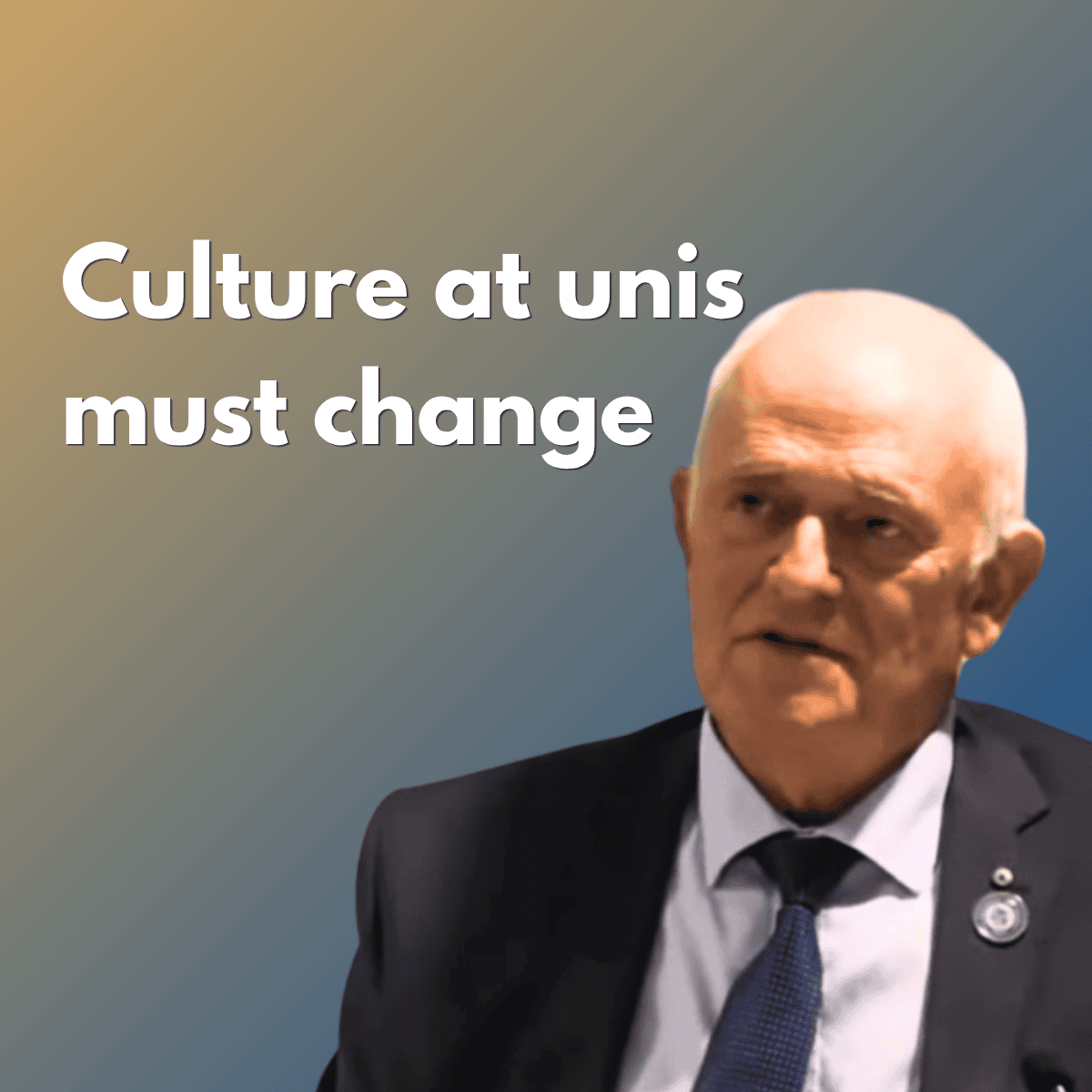

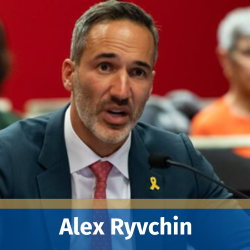
Co-CEO Alex Ryvchin testifies before NSW Parliament’s Antisemitism in New South Wales inquiry.
Official NSW Parliament transcript
The CHAIR: Thank you very much for coming, Mr Ryvchin. Would you like to make a short opening statement?
ALEX RYVCHIN: Thank you. I’m deeply grateful to Mr Borsak and the members of this Committee for your work, which goes to the heart of freedom and fairness in this State that we are blessed to call home. I appreciate the opportunity to meet before you. I’d like to speak about the impact that antisemitic incidents have on individuals and families by sharing how my family was affected by the attack on our former home in Dover Heights in the early hours of Friday 17 January of this year. I became aware of the incident at around 5.00 a.m. that morning. My family and I had returned the previous evening from a holiday in Brisbane. The day after the incident I was due to fly overseas. The Friday on which the attack occurred was supposed to be the solitary day of rest at home with my family, ushering in the Sabbath before taking off again. My wife shook me from my sleep and handed me her phone. It was footage taken by our old neighbours across the street — flames rising high into the night sky, scorched cars with the words “Eff the Jews” and “Eff Israel” daubed on them, and the facade of our former family home disfigured with red paint.
I switched on my phone and it began ringing immediately — one after another, journalists offering condolences with one breath, looking for the scoop that it was indeed my former home with the next. We thought about our three daughters, who would soon be awake and jumping into our bed as they do every morning. My wife arranged for her mother to collect them to allow us to deal with the chaos. By early afternoon the story broke that the house had for five years been our family home. My wife and I then walked to the house to inspect the damage, to comfort our friends and neighbours, and to answer the questions of the media assembled there. That evening I asked my wife if I should cancel my trip. How could I leave them? “How could I not go?”, she said to me. As much as she wanted me home, what could be more fateful and appropriate than representing the community at the eightieth anniversary of the liberation of Auschwitz, to honour and remember, to contemplate man’s capacity to burn and destroy, and to hear the final testimonies of the survivors?
So at 6.00 a.m. the following morning I was on the plane, leaving my wife to answer the questions of our daughters and to explain to them why someone had replaced the whitewash I had lovingly applied with the red paint signifying blood, why they had scrawled words cursing the Jewish people on the cars out front, targeted the place where we had built our family and experienced the happiest days of our lives — a suburban street where families slept just metres from the inferno — and the toughest question of all, which came repeatedly from our middle daughter, aged nine: “Are we safe now? Are they going to come for us again?” It’s a question we still don’t fully know how to answer without deceiving ourselves and them.
A few weeks later, as I was boarding the long flight home, I checked in with my wife and my colleagues. At that moment, news about the Dural caravan was breaking. I received the update that a list of Jewish targets was found in the caravan. There were rumours that an attack was imminent. Fear was sweeping through the community. My wife asked me another question I didn’t know how to answer: Was it safe, or should she wake the kids and leave the house? This is, of course, how terror is intended to work — to alter our perceptions and decision-making through fear, and shatter the sense of predictability and order, which allows us to live our lives. For the Jewish community, we have been targeted day after day, and it has forced families to ask whether their children are safe sitting in a classroom in a Jewish school or are they sitting ducks. Would their loved ones receive proper care in our hospitals, or would they encounter more people who thought and felt like the Bankstown nurses? Could they enter our CBD with a Star of David necklace or a Jewish head covering? Was that a humble act of faith or just asking for trouble?
In reflecting on the attack on my former home, I don’t wish to mislead this Committee. I’m here giving something of a victim impact statement, but I in no way consider myself a victim. The attack may have made national and international headlines, but it is not nearly the most serious or life-altering incident. Every day for 20 months I’ve spoken to members of my community who have been abused and threatened, and who face the risk of being pushed out of their industry, of losing their livelihood, of being denied the ability to do what they love, because they are Jewish and hold ordinary, mainstream views. Each such incident changes a person. It changes their sense of worth, their state of mind and how they engage with those around them. This, in turn, changes how communities interact and how society functions.
The summer of firebombings may have passed, but the daily experiences of Jews in New South Wales and around the world has not changed. Indeed, in the short weeks between the hearings of this Committee, we entered a dangerous new phase. A young couple engaged to be married were murdered, shot to death from point blank range outside a Jewish community event in Washington, DC, hosted by an organisation that is a close partner of my organisation. Eight people were burned during a peaceful walk in Boulder, Colorado, to raise awareness about the plight of Israeli hostages. An 88-year-old woman, a Holocaust survivor, remains in a critical condition. In both cases, the terrorists yelled “Free Palestine” as they attempted to kill innocent people in a Western country. A few days ago, a long time organiser and leader of the Free Palestine Movement in this country, an academic at Sydney University, said he wanted to see Zionists executed.
The inability to distinguish between political activists and those who just want to execute Zionists has allowed antisemitism to shift from the margins to mainstream, even educated and fashionable, society. And it has signalled to other violent elements, including neo-Nazis and organised crime, that publicly attacking Jews is a legitimate and effective form of action. Those who deny antisemitism, say it is provoked by things Jewish people say or do or think it is invented as a ploy to shield Israel from criticism, not only reinjure those who have suffered; they threaten the stability of our society. Excusing attacks on one minority serves to normalise abnormal conduct that threatens society as a whole. If we don’t solve this problem, antisemitism will degrade this country and strip away the virtues of fairness, rationalism and decency that make it the greatest country in the world. I wish you great success in your important work. Thank you very much.
The Hon. CHRIS RATH: Thank you so much for appearing today and for your opening statement. The two individuals that that were involved in the incident on your former home have now been charged. My understanding is that they were on remand from previous attacks, whether it be graffiti or fire-related incidents I think with Newtown Synagogue. Is that correct?
ALEX RYVCHIN: My understanding is based very much on what’s in the public domain. I had conversations with counterterrorism in the hours after the attack in connection with my own personal safety and the safety of my family. But since that time I’ve had fleeting conversations with the AFP and State police. It’s really a matter of what’s been reported. I understand that two individuals, as you say, have been arrested, or were already held, and the police are investigating the probability that it was a larger conspiracy involving drug smugglers and low-level criminals and so forth. There seems to be a strong organised crime component to it, is what I understand.
The Hon. CHRIS RATH: I think this is important because I’ve heard some commentary recently that this is all from criminals and it’s not antisemitic. But when you see red paint that says things like “Eff the Jews” on a home that they assumed was owned by you, how can it be anything other than an antisemitic attack? In all the media commentary that’s come out over the last few months in particular, how do you differentiate between criminal-inspired incidents versus antisemitic incidents? I suppose, the connection being that these criminal acts are only taking place on Jewish targets, or assumed to be Jewish targets, so they themselves are antisemitic attacks in nature, aren’t they? How can you differentiate it?
ALEX RYVCHIN: I agree with that analysis. I think there have been segments of society and the media and the political class that have sought to deny or minimise antisemitism. I think they had that agenda from the beginning. When the police announced that the Dural incident appeared to be a hoax in the sense that it wasn’t intended to be a live attack to be carried through, I think a lot of people rejoiced at the entire summer of terror that jeopardised the lives of the Jewish community and targeted very specific Jewish homes, institutions and places of worship, with very clear slogans referring to the Jewish community, which were clearly materially antisemitic, without question. I think it served the agenda of some to deny that, to obfuscate, or to confuse or divert the discussion. But when you have attacks of that sort — firebombings of Jewish-owned businesses, a place of worship and the former home of a community leader — it’s very clearly antisemitic.
The more that was revealed about this organised crime syndicate and the alleged kingpin and his own personal background, views and ideology, the more the view was reinforced that it was very clearly antisemitic. The critical thing is the outcome rather than even the ideology or motivation. One thing I was asked a lot in the aftermath of the police press conference was, “Do you feel a relief that this was organised crime rather than more conventional antisemitic actors?” I can tell you that relief was the furthest thing from my mind and the minds of members of the community. When you suddenly have, in addition to more conventional antisemitic actors, people with ready access to guns and explosives who were clearly willing to set them on fire— The Hon. CHRIS RATH: It’s even more dangerous.
ALEX RYVCHIN: That’s right. It’s another dose of danger and terror that was struck into the community.
The Hon. CHRIS RATH: In some ways, some of these incidents were not antisemitic by intention, but they were antisemitic by effect or by implication. The end result of what is happening is that Jewish businesses, homes and cars are being targeted. Even if the intention was criminal and may not be antisemitic inspired, the effect of what is being undertaken is that it’s only Jewish targets. The community that is bearing the effects of that is the Jewish community. Would you agree that it’s almost unhelpful to downplay the antisemitic nature of some of these incidents, whether they be graffiti, firebombings or various other incidents we’ve seen, throughout the summer in particular? It’s getting a little bit better now, but I think over the summer was the worst of what we saw.
ALEX RYVCHIN: I think it’s absolutely impossible to downplay the antisemitic element to all this when you have synagogues burned and attempted attacks on other places of worship, Jewish businesses and homes. We all know that the list of targets were all unequivocally Jewish targets. It would be insane to try to remove an antisemitic component from it. The effect was very clearly antisemitic and very clearly to terrorise the Jewish community — without question. As to the motives and intent, we can’t fully know that until the matter is brought before the courts. But, again, I feel that there are segments of society that are bending over backwards to try to find motives which may not be there, purely because it advances their agenda. It allows them to minimise or distract the eye from what’s happening in our society.
The other point that I’d note is that, while the firebombings were the most high profile and terrifying incidents, my organisation has logged, in the year following October 7, over 2,000 incidents of antisemitism. As I mentioned, every one of these incidents affected someone’s state of mind, their quality of life and their ability to do what they love. It made them feel estranged and separated from wider society. It has an impact on our social harmony and how communities function and interact with one another. While what we call the summer of terror has thankfully subsided — and hopefully we’ve seen the end of it — given what’s happening abroad and the incidents in the United States to which I referred, I caution that the end is not upon us yet. The worst might still be to come. Every day Jewish Australians in this State are suffering incidents, whether it be in schoolyards, university campuses or workplaces or whether it be through global campaigns on TikTok calling for the destruction and obliteration of Israel and its people. This continues on a daily basis.
The Hon. STEPHEN LAWRENCE: Thanks so much for coming along to give evidence — it’s appreciated. I remember around the time that the existence of that criminal conspiracy was revealed, The Daily Telegraph had a front page that said it was all a vile hoax. That, to me, seems to understate the matter. Could you talk to — and you already have to an extent — what significance you attached to this revelation of the criminal conspiracy in terms of what had happened to you, and in what ways it didn’t change what had happened to you?
ALEX RYVCHIN: When something like that happens — and I described in detail how it unfolded and how we experienced it as a family — all of these analyses and revelations afterwards about a criminal syndicate or whatever the motives were don’t really alter anything, because what happened happened. The incidents that have struck the Jewish community, whether my family or others — they occurred. Multiple media — it wasn’t merely the Telegraph — ran with the lead bulletin that it was all a hoax. Again, I think some of it was self-serving and others were perhaps misinterpreting exactly what the police were saying. But, again, the effect of that was to quell the conversation about antisemitism, because prior to that point there was a necessary public examination of what was happening in our society and the impact it was having on Jewish Australians and wider social cohesion. It was a conversation that had to be had. I feel like this inaccurate and careless reporting about it all being a hoax kind of killed that conversation.
The other thing that it did was — social media was for a long time awash with conspiracy theories that all of this was concocted by the Jewish community, that it was an inside job or a Mossad plot — all of these nonsense theories that tend to attach themselves to the Jewish people. You can imagine the storm that that kicked off on social media and in other recesses of society. They felt vindicated. They felt like, indeed, none of this had actually happened or it had been inflicted on the Jewish community by itself. It was careless and I think it was counterproductive, but it’s important that we reset and recalibrate the conversation to talk about what actually transpired and how we, as a society, can move to actually curing this problem.
The Hon. STEPHEN LAWRENCE: Having worked in the criminal law for two decades, I’m pretty sceptical about the proposition that a person who would create this criminal conspiracy to achieve this ulterior motive, and would so focus it on the Jewish community, wouldn’t also be antisemitic, even if they had an ulterior motive. It seems to me that the revelation of the conspiracy, though, is relevant to what that spree of terrible attacks said about community-wide sentiment. I do remember throughout that time that there was a lot of understandable things said: that this spree of attacks reflected some community-level rise in antisemitism in and of itself. It seems to me that the true relevance of that plot is not that the whole thing was not antisemitic, but rather that it seems to have been the actions of one person. He, of course, used agents, but there’s no suggestion that they were antisemitic. That’s my understanding. They seemed to have been people not with an ideological motive and people in the criminal milieu. I’m wondering if you would agree with that analysis.
ALEX RYVCHIN: I do. Again, it’s based on conjecture and theories because until we have these people in custody and brought before the courts and we see the evidence, it’s difficult to draw any definite conclusions.
But for a criminal mastermind to concoct a scheme of this complexity involving so many moving parts and individuals, and to identify individual Jewish targets, source addresses, potentially, of Jewish communal leaders—
The Hon. STEPHEN LAWRENCE: From Turkey.
ALEX RYVCHIN: That’s right. To do all of these things and have no ill feeling towards the Jewish community, I don’t buy it. I think it’s highly implausible. You mention the Telegraph. The Telegraph broke a story that identified this individual and [The Australian] looked through his social media history. He’s got a long record of posting viciously antisemitic statements glorifying Nazism, calling for the death of Jews and so forth, so I think the case became more complex at that point in time. No-one was surprised by those revelations. But, again, I think we’re in the realm of theory and conjecture here. I think what happened is what’s critical here. What the Jewish community experienced was no hoax. The flames, the abuse, the harassment, the exclusion — it was very real.
The Hon. STEPHEN LAWRENCE: An issue before the inquiry, which I’m sure you’re aware of, is the conflation of criticism of Israel with antisemitism. It seems to be one of those issues where to work out what antisemitism is and the extent of it, we perhaps need to also work out what it is not. You’ve been, I think it’s fair to say, a vigorous advocate in the public sphere for the state of affairs as you see it, and you’re probably someone on a particular end of the spectrum in terms of how you analyse certain criticisms of Israel and what you see as antisemitic that other people might see as legitimate criticism.
ALEX RYVCHIN: I’m not sure I — if you could elaborate on what you mean by the spectrum and—
The Hon. STEPHEN LAWRENCE: I don’t mean to put words in your mouth. I think the question I’ll finish with is going to give you the chance to explain this. What do you see as the line between legitimate criticism of Israel, particularly from a Palestinian Arab perspective, and antisemitism?
ALEX RYVCHIN: To me, it’s very clear. I don’t think there’s a genuine conflation. People can very clearly distinguish between critiques of policy and politicians — which is utterly fair game in this country — and about Israel, within Israel and outside as well, and a deep contempt and hatred for the Jewish people. There’s a very clear distinction between them. If we talk about, for example, Itamar Ben-Gvir or Bezalel Smotrich — a couple of firebrand far-right politicians in that country — you can criticise them freely. I have. We criticised them when they were brought into the opposition. No element of that would be considered antisemitic or anti-Zionist. It is a criticism of individuals, their rhetoric and their policies.
Something happens when we talk about Israel that is peculiar to Israel that seems to happen with no other country. We can talk about Iran, China, Russia or whatever democracy or autocracy in the world. The conversation never then becomes about denying the right of that people to be a people or the right of that people to have a State. We never transfer classic antisemitic or racist views about a particular people to the country, impute motives to those people and say, “You do what you do because this is how Jews behave and have always behaved.” We can talk about settlements, the war, how it’s been conducted and ceasefires. None of that is illegitimate. I know some people will use more trenchant, aggressive forms of criticism, which doesn’t in itself constitute antisemitism. It could be wrong, it could be ignorant or it could be hateful, but it’s not necessarily antisemitic. To me, it’s very clear. The greater conflation occurs not with antisemitism and anti-Zionism but between anti-Zionism and criticism of Israel. You can criticise Israel, its policies, actions and politicians and not talk about the right of the State to exist, which, again, occurs with no other country.
The Hon. STEPHEN LAWRENCE: It seems to me, though, that there are a number of aspects to the issue that are almost unique. I’ll give you an example. It’s often said that it would be antisemitic to deny the right of Israel to exist. There’s obviously this contested issue of the right of return. It’s often said that if the right of return was granted, it would be the end of Israel. For some people, to say that Israel has the right to exist necessarily, for them, involves the denial of the right of return, because the right of return, on that analysis, is inconsistent with the existence of Israel going forward. How do we unpick the view of a Palestinian expelled in 1948 or 1967 who thinks that Israel is a thoroughly racist endeavour and would like the right of return and, therefore, might be taken to be questioning the right of the Jewish State to exist? How do we analyse their statements and their opinions in light of this line between antisemitism and criticism of Israel that sometimes, as a threshold issue, is said to involve acceptance of the right to exist?
ALEX RYVCHIN: You’ve chosen a very specific example to do with the right of return. I’m not suggesting that any Arab Palestinian who bears a grievance from 1948 and the population transfers of Jews and Arabs that occurred as a result of that needless war waged by seven Arab States on a nascent Jewish State — things happen in war. Populations shift. People suffer, without question. I wouldn’t deny anyone’s suffering. The question you’re asking is if a Palestinian says that their great-grandfather lived in Haifa or Acre prior to 1948, they were displaced — and people were displaced for all sorts of reasons, including fleeing a war zone because they were caught up in the battle lines—
The Hon. STEPHEN LAWRENCE: And including ethnic cleansing.
ALEX RYVCHIN: I would deny that there was ethnic cleansing. There was no program of ethnic cleansing. There was no policy of ethnic cleansing.
The Hon. STEPHEN LAWRENCE: But you wouldn’t dispute that it occurred.
ALEX RYVCHIN: I firmly would dispute that it occurred. When we talk about ethnic cleansing, we talk about the forceable—
The Hon. STEPHEN LAWRENCE: Expulsion.
ALEX RYVCHIN: —expulsion of a particular ethnicity or race of people from a territory. That did not occur as a program. If that did occur, then you wouldn’t have 20 per cent of Israel’s population being Arab. You wouldn’t have had the Mayor of Haifa going on broadcast to the people and saying, “Do not leave. This is your city as well.”
The Hon. STEPHEN LAWRENCE: You say, “Not as a program”, but you don’t deny that in particular instances it had occurred.
ALEX RYVCHIN: I resent and I reject the use of the term “ethnic cleansing”. I will say that, certainly, people who lived in certain places prior to 1948 ceased to live there. As I said, that occurred for a number of reasons, including the natural human compulsion to flee a war zone and including the leaders of the Arabs saying, “Depart this war zone and then return once we’ve driven the Jews into the sea.” There were a myriad of reasons, and one of those reasons was that there were Arab towns and villages caught up in the war and the fighting, because Israel was invaded from many fronts, but also from within.
Certain villages were removed of their populations because they were caught up in the battle zone, and they were behind the lines of the Israeli fighters, so it was necessary from a military point of view. Horrible things happen in war. People are displaced. I think the lesson from that is don’t start wars, and don’t start wars that you lose. We also saw about 800,000 Jews living throughout the Arab world forcibly removed, plundered and expelled from their countries. To me, that far greater constitutes ethnic cleansing than a defensive, legitimate war and what happened as a consequence of that war.
Dr AMANDA COHN: Just following up on this line of questioning, I’ve been reading the ECAJ report on antisemitism for 2024, which you’ve quoted. First of all, I’ll just say that some of the examples in this are really chilling, for anyone who’s going to accuse me of trying to minimise antisemitism. But one of the examples in that report in the section on graffiti was an example of graffiti that simply said, “Free Gaza”, and that was given as an example of antisemitism in your report. Can you explain in what way you and your organisation view that statement as antisemitic?
ALEX RYVCHIN: Sure. I don’t have that specific incident in front of me. I don’t know to what exactly it refers. But if you’re asking me the question about whether graffiti saying, “Free Gaza”, of itself, is antisemitic, I would say no. But context is critical, and every single incident that’s in that report is there because of context. For example, if one were to daub that on a synagogue or proximate to a Jewish site in a way that implies that Jews are collectively responsible for the situation in Gaza, that would be antisemitic. But if someone walks down the street at a rally and waves a banner saying, “Free Gaza”, I wouldn’t consider that antisemitic, and the report certainly wouldn’t either.
Dr AMANDA COHN: I think part of the challenge that I’m facing and that certainly the Committee is facing in trying to establish the problem that we’re trying to address — the report says, based on the definition of antisemitism you’ve used or the way that these incidents have been compiled, that there was an increase of 316 per cent in antisemitic incidents following 30 September 2023. It’s a deeply concerning statistic, but what I’m trying to understand is how many of those incidents are in the order of the really distressing, clearly antisemitic physical assault examples that are described in this report, versus political messages where it may be contested even within the Jewish community whether they’re antisemitic or not. Is it possible to provide a further breakdown of that data to help us understand the nature of the antisemitic incidents that you’re counting?
ALEX RYVCHIN: The report does break things down in terms of general discourse incidents, whether it’s physical assault, whether it’s graffiti, whether it’s vandalism. It’s broken down by category of incidents. Some of them are naturally more extreme than others. An attack on an individual is going to be more distressing than graffiti, certainly, but they’re all incidents. They’re all incidents of antisemitism. Now, political slogans in and of themselves are not counted in this report as being antisemitic incidents. Again, if the context in which it occurred leads one to conclude that it was an act of antisemitism because of the way that it targeted Jewish individuals, if a Jewish student — again, I’m just raising examples here, but this occurs frequently. If a visibly Jewish student is walking through a university campus and someone starts taunting them with “Free Gaza; free Palestine”, merely because they are visibly Jewish, that is the harassment of a Jewish person because they are Jewish. That’s all that is.
Dr AMANDA COHN: Yes, understood.
ALEX RYVCHIN: The slogan itself—
Dr AMANDA COHN: You have provided the breakdown in the report, and I’ve got it in front of me. You’ve got 33 per cent of the incidents being posters, 19 per cent graffiti, 14 per cent messages. I’m focusing on those ones because they are much more difficult to understand than the 3 per cent assault, which are well described in the report. It’s a significant proportion of the incidents that you’re reporting that are in this category of posters. Surely it’s difficult to work out whether a political poster is being targeted at somebody because of their ethnic background. Surely a poster is not targeted at a person, by definition.
ALEX RYVCHIN: No, that’s right. If that’s the case, it doesn’t make it into the report. We have a very stringent threshold as to what goes in there. If it’s a poster about, let’s say, genocide — which is a very extreme, ignorant accusation, but people make it — I wouldn’t consider that to be, of itself, antisemitic. If that is plastered somewhere on a public street, I think it is pretty disgraceful and inflammatory and devoid of truth, but I don’t consider it to be antisemitic. Again, if it’s done proximate deliberately to a Jewish site or at a Jewish facility, then that’s a different situation. Again, as with Mr Lawrence’s example with the right of return, I think we are identifying very specific examples and perhaps outlying examples.
When you talk about messages and slogans, the vast majority of them are unequivocally, viciously antisemitic and very clearly targeting the Jewish community, including wishing death upon members of the Jewish community. Sometimes they use euphemisms like Zionist, but frequently they don’t. There are those examples that we would consider to be on the lower spectrum of things and some might be a little bit debatable, and we can have that conversation. But we’re talking about over 2,000 incidents. We’re talking about an experience that the Jewish community has lived through for a long period of time. We know what hatred against us looks like. The things that go on that report are antisemitic incidents; they are not political discourse.
The CHAIR: Have your or your family’s relationship with and belief in Australia changed at all?
ALEX RYVCHIN: That’s a very fine question. I consider this, as I said in my remarks, to be the greatest and freest country in the world. I came to this country as a refugee from the Soviet Union. Having seen the alternative — despotism, socialism, communism, autocracy, and the denial of human dignity and human rights— I cherish these things in this country. Of course, in the past 20 months I have seen things which have shocked me and which have saddened me deeply. The house that I spoke about was — I don’t want to digress too much. When we first migrated to the country, I would drive up and down that street with my grandfather, who drove a van taking Holocaust survivors to a Jewish community centre.
He was so taken with that road because it looked out onto the ocean. To him that road symbolised the greatest of Australia — the freedom and beauty of this country. And then to have a house on that road, which I had purchased, defiled in that way hurt me on a very deep and personal level. But it has made me more determined to fight for this country and fight for the goodness of this country, and to banish the hateful elements from it, because it is not Australia. I have encountered racism and antisemitism throughout my life, in limited instances, but this is not a racist country and this is not an antisemitic country. We have a duty to drive those horrific elements from our sight; otherwise this country will change in its character. But I remain a great lover of and a great patriot of this country.
The CHAIR: You talk about coming from what is now Ukraine. My ancestors were expelled from eastern Poland by the Soviet Union just as World War II was beginning. I have relatives that now live in what is the current Poland in the east. They certainly talk about what was going on in those days. I have a little bit of sympathy — a lot of sympathy, actually — for what you are talking about. Do you believe that we could go back to the old ways, before all this got started? Could we ever get to that level again — that perfection you are talking about?
ALEX RYVCHIN: I am an eternal optimist, which might sound paradoxical with being a Jewish person and the things that we have experienced. But I do think the best of human nature, and certainly of this society. But I do know that what has been allowed to move into the public sphere and into mainstream discourse and conversation will be very hard to push back. There were always elements of this society that were antisemitic, and people held certain stereotypes and beliefs and prejudices, but we didn’t have what one would call active antisemitism.
People maybe latently harboured certain views about Jews, but they weren’t compelled to or they didn’t feel the right or the freedom to act upon that. That is the real thing that has changed. People feel that they can voice this antisemitism. And then there is what’s happening with social media — the disinformation, the recruitment, the radicalisation. It’s the sort of tool that Henry Ford or Martin Luther, and certainly the Soviets and the Nazis, could have only dreamed of having to advance their agenda. It is going to be extremely challenging, and it will require a wider approach than merely government and merely community. But I believe fundamentally in the goodness of this country. I think we need to arrest this problem before our character is forever changed.
The CHAIR: Thank you very much for coming today.