
The Executive Council of Australian Jewry is profoundly concerned by the findings of the University Report Card Sectoral Assessment released by Australia’s Special Envoy To Combat Antisemitism.
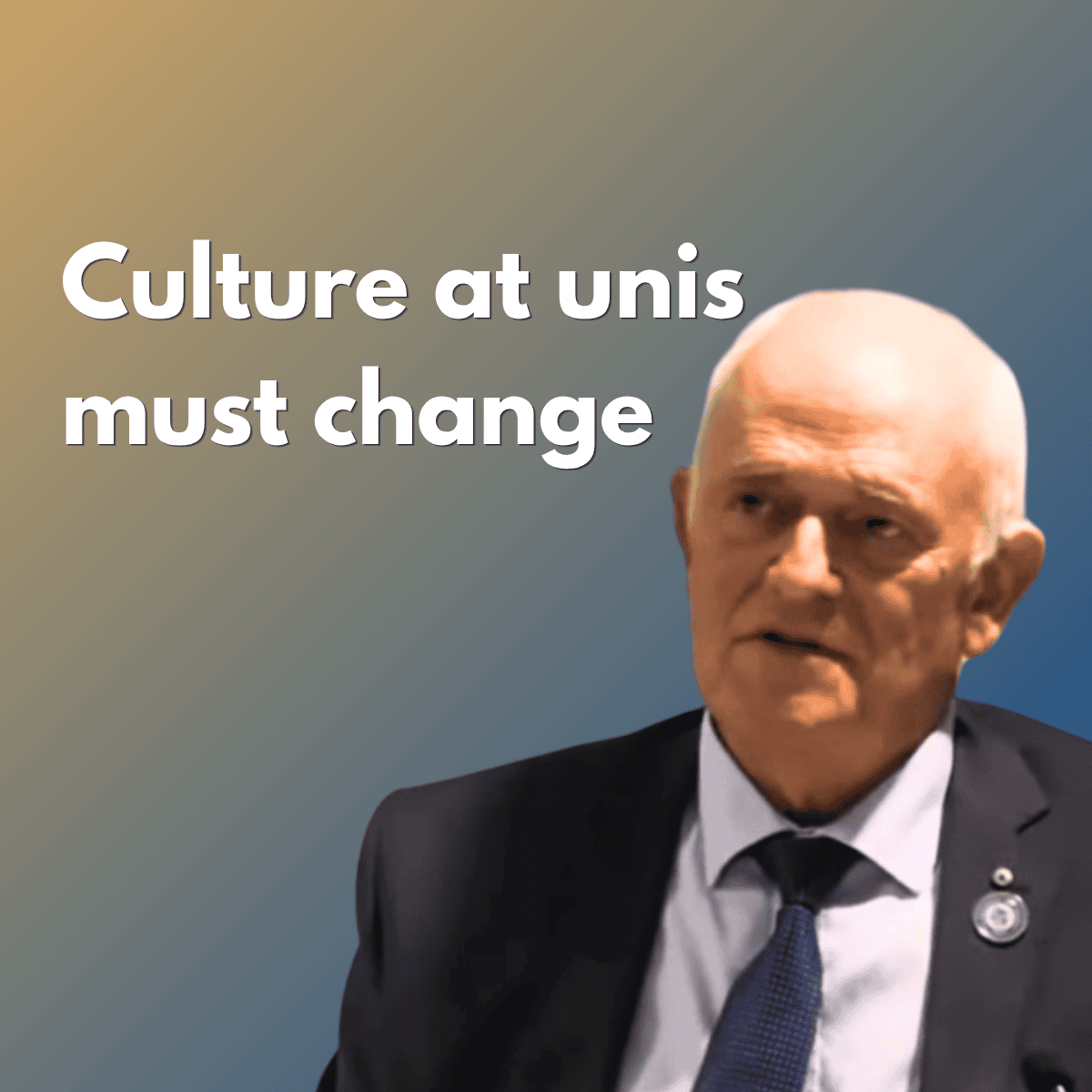
As noted by Emeritus Professor Greg Craven AO, who was appointed by the Special Envoy as the Independent Assessor, the intention was to issue report cards for each university against the following five domains: Policy Setting; Complaint Process; Definition of Antisemitism; Antisemitism Training; and Rebuilding Trust on Campus.
However, “it quickly became apparent that the university sector as a whole had failed adequately to address the threshold issue of adopting a definition of antisemitism,” rendering it “impossible to assess such operational matters as dispute and complaint handling and programs to cultivate awareness of antisemitism”.
Echoing the concern and disappointment expressed by the Special Envoy, Jillian Segal, ECAJ president Daniel Aghion KC said, “It is deeply dispiriting that universities’ failure to adopt a definition of antisemitism is symptomatic of the ‘sectoral failure’ of universities in living up to their duty of care to staff and students who have been negatively impacted by greatly increased levels of antisemitism that have been well-documented at their universities.
“While it is encouraging that a small number of universities are at least on track to adopt a definition, as the Special Envoy observes, ‘No university can develop adequate policies and procedures, including complaints procedures, for dealing with antisemitism, if it cannot first define what its policies and procedures are intended to eliminate. No university can provide professional development programs about recognising antisemitism without first defining what it is that needs to be recognised.’”
This sentiment was in line with evidence presented on Thursday morning to the Royal Commission by British antisemitism expert Dr Dave Rich, who said, “Because antisemitism doesn’t always present in the most explicit, crude terms … it’s not always straightforward to recognise and identify.
“So, an agreed definition that identifies other ways in which it can manifest and present has to be there as a baseline, otherwise people won’t know how to apply policies as they won’t know what to apply them to. Or you’ll have different agencies applying measures in different ways to different things because there’s not a common definition.
“It’s almost a truism, you have to know what antisemitism is in order to develop policies against it.”
ECAJ welcomes the steps taken by the Special Envoy and Independent Assessor furnishing universities with a wealth of information to assist in adopting a definition, and urging them to commit to a deadline of 31 August.
Mr Aghion said, “In the aftermath of Bondi and in the midst of the Royal Commission, we find ourselves at a critical juncture where the epidemic of antisemitism can no longer be ignored. At this time, it is incumbent on every Australian institution to ensure that they are not found lacking when it comes to tackling this scourge.
He added, “Given the political awareness and activism of both staff and students in the academic sector, it is particularly important that our universities do not forgo this opportunity.”