


ECAJ Executive Director Peter Wertheim was quoted in the Australian Jewish News this week regarding a recent motion about Israel that was debated at Western Australia Labor Conference. Elaborating on his views, Peter has written about the recent trend of Israel resolutions at Labor State conferences.
The ALP and Israel: A Guide for the Perplexed
Peter Wertheim AM
September, 2017
During July and August 2017, resolutions were passed at ALP State conferences in NSW, Queensland, Tasmania, the ACT and Western Australia, urging the next Labor government to recognise a Palestinian State.
These resolutions did not have the same qualifications or conditions that were contained in the 2015 ALP National conference resolution, which called on a future ALP government, in the event that there continues to be no movement in the peace process, to “discuss” joining like-minded nations who have already recognised Palestine and announce “the conditions and timelines” for Australian to recognise a Palestinian state.
The main debate was at the NSW ALP Conference on 30 July 2017. The NSW Branch is the ALP’s largest and most influential State branch. The officially pre-endorsed motion for the NSW conference “noted” the 2015 national conference resolution, and said that the NSW branch “urges the next Labor government to recognise Palestine”.
It ought to be noted that the key issue is not about recognition of a Palestinian state per se, but whether a Palestinian state can or should be established and recognised other than as an outcome of a comprehensive peace agreement between Israel and the Palestinians. In the Road Map of 2003, both Israel and the Palestinians agreed that a Palestinian state will emerge from a peace agreement.
As a result of a concerted effort by those in the Labor party who have a realistic understanding of the necessary elements of a peace agreement, a new paragraph was inserted into the officially pre-endorsed NSW ALP Branch motion immediately prior to the paragraph urging recognition. The new paragraph noted that Labor “supports the recognition and right of Israel and Palestine to exist within secure and recognised borders”.
The expression ‘secure and recognised borders’ necessarily implies an Israeli-Palestinian peace agreement as a sine qua non of Palestinian statehood and recognition. Without such an agreement, the borders would necessarily remain disputed, not ‘secure and recognised’.
It was for this very reason that Israel’s opponents strenuously resisted the addition of that extra paragraph into the motion. They failed. So the insertion of this extra paragraph into the NSW Branch motion, which subsequently became the resolution passed by the WA Branch as well, was a crucial victory for Israel’s supporters.
Bob Carr, who has led the charge against Israel at ALP conferences over the last few years, subsequently tried to spin the NSW Branch resolution as an endorsement of “immediate and unconditional recognition” of a Palestinian state. Other opponents of Israel have tried to give it the same spin, pretending that the additional paragraph that they resisted so vehemently, just isn’t there.
In truth, the words “immediate and unconditional” do not appear in the resolution and, for the reasons I have given, there can be no denying the significance of the insertion into the resolution of the expression “secure and recognised borders”’.
Further, Labor leaders Bill Shorten, Penny Wong, Chris Bowen and Tanya Plibersek all confirmed on the record that a future Labor government will not be bound by any ALP State Branch resolution and, once in government, will act independently in the light of legal and other expert advice.
Nevertheless, the general drift in sentiment away from Israel within the ALP is an ongoing concern. This drift opens the door to a grave weakening of Australia’s traditional bipartisan consensus in favour of, and the ALP’s commitment to, a just and peaceful resolution of the conflict. The acid test will come at the next ALP national conference in July 2018.
The rationale put forward by those seeking a change in the ALP’s policy on Israel is that Israel is predominantly to blame for the stalling of the peace process because of continued settlement construction. Even if this were a fair and accurate assessment (which it is not), it is not clear how this would justify recognising as a State, an entity which even the Palestinians’ own lawyer, Professor Guy Goodwin-Gill, has said does not meet the minimal legal criteria of statehood. Two wrongs don’t make a right.
There can be no justification for placing the preponderance of blame for the absence of a peace agreement on Israel. Since 2000, Israel has made at least three peace offers to the Palestinians which included the establishment of a Palestinian State over territory equivalent in area to 100% of the West Bank and Gaza. Israel has repeatedly called on the Palestinians to return to negotiations without preconditions. The Palestinians have refused.
Recognition of a state is supposed to be an acknowledgement of an existing reality, not an act of wishful thinking. To my knowledge, no international lawyer of any eminence has asserted that a Palestinian entity currently exists which satisfies the generally accepted criteria for statehood under international law. Quite the contrary. There is no provisional Palestinian government that controls, or is likely any time soon to control, both the West Bank and Gaza, and thus there is no Palestinian state to recognise.
Further, by requiring nothing of the Palestinians in return for recognition, those who advocate immediate and unconditional recognition of “Palestine”, are in effect seeking to pressure only one side, Israel, to make unilateral concessions, without requiring the Palestinians to accept reciprocal obligations as a condition of statehood. This can only serve to discourage the Israelis and incentivise the Palestinians, against making the hard compromises that will be essential for a just and lasting peace.
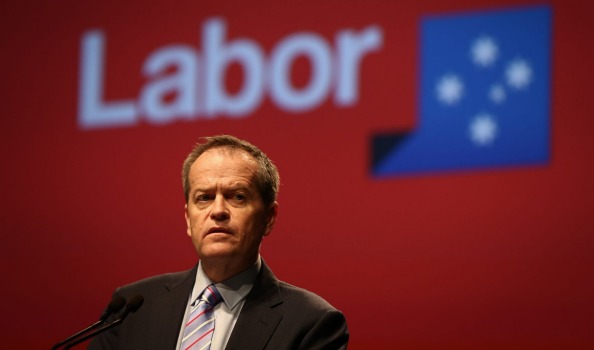
Photo Credit: Financial Review