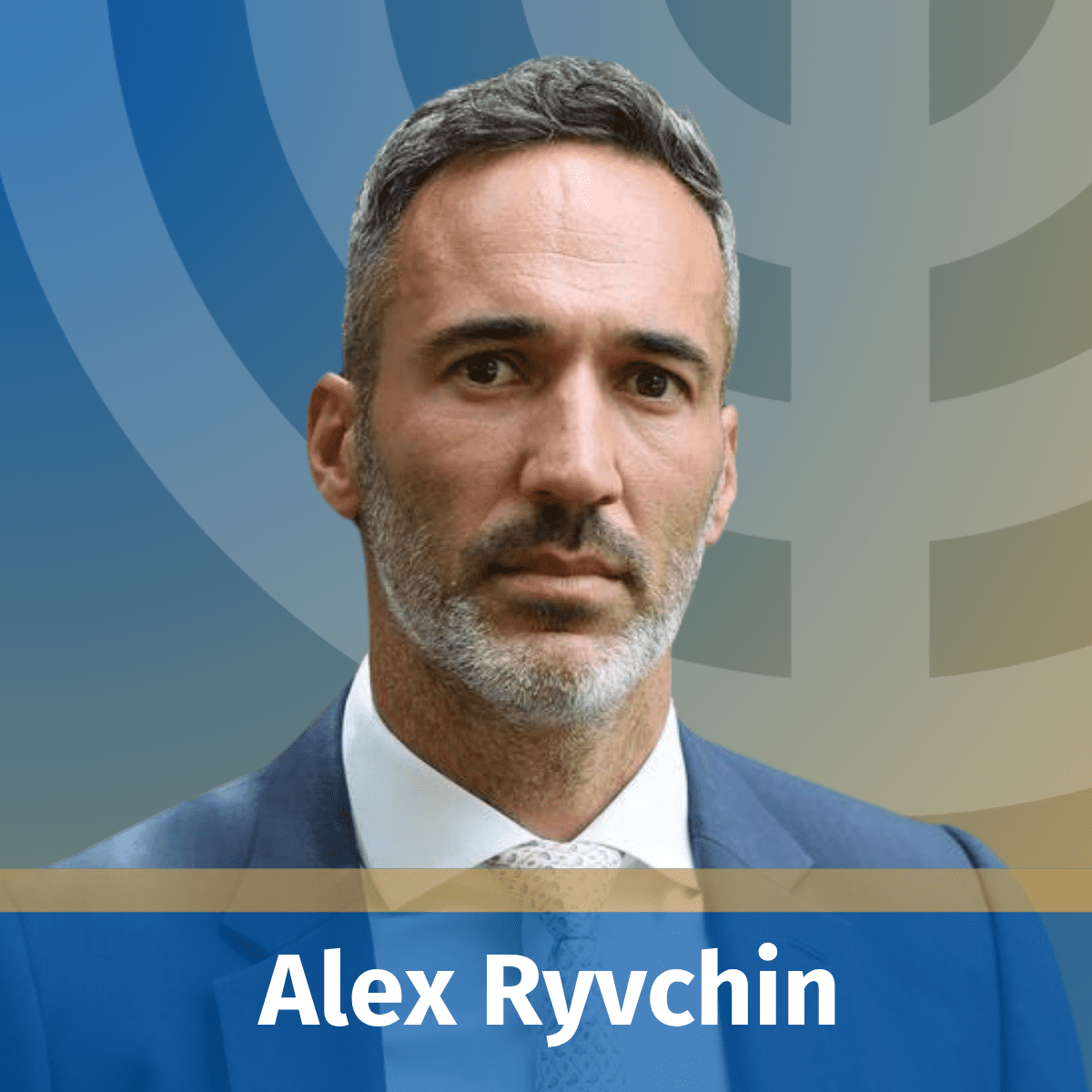


The following piece by Alex Ryvchin, the ECAJ’s Public Affairs Director, was published in The Australian on 11th January, 2018.
Smiling barbarians not planning for peace
Alex Ryvchin
The Australian
January 11, 2018
The image of the invariably smiling Iranian Foreign Minister Javad Zarif purring at the side of world leaders, together with the election of the so-called “reformist” president Hasan Rowhani in 2013, have cultivated an image of the Iranian regime as modern, civilised, reasonable and a welcome antidote to the inhuman Islamic State and other Sunni jihadists. But a closer examination of the regime’s regional designs and behaviour reveals a dangerous malevolence.
Under President Rowhani, state executions in the Islamic Republic have continued at their usual rollicking pace. Iran ranks first in the world in executions per capita. Human rights groups reported 239 executions in Iran in the first half of 2017, some involving minors, others conducted in public. In August 2016, the Iranian regime announced the execution of a group of 20 men (believed to be Sunni Kurds) on the charge of “enmity to God”.
Iranian industrial workers have been flogged for protesting the firing of their fellow employees. Children identified as LGBTI are subjected to electric shock therapy to “cure” them. Adults accused of sexual deviancy are hanged from cranes. Baha’i people are systematically denied basic human rights, including closure of their businesses, and exclusion from employment and education, and they are subjected to arbitrary arrest, often for many years.
Abroad, Iran’s hand can be seen in every theatre of war in the Middle East and in terrorist attacks against civilian targets farther afield. An Argentinian government investigation into the bombing of a Jewish community centre in Buenos Aires in 1994 that killed 85 people and wounded 300 others, found that “the decision to carry out the attack was made, and the attack was orchestrated, by the highest officials of the Islamic Republic of Iran, and that these officials instructed Hezbollah — a group that has historically been subordinated to the economic and political interests of the Tehran regime — to carry out the attack”. In 2012, Hezbollah operatives murdered six people in a bus bombing at the Burgas airport in Bulgaria.
In Iraq, Iran’s Islamic Revolutionary Guards Corps-Quds Force, led by Qasem Soleimani, is widely believed to have killed 500 US servicemen by supplying Shia extremists with advanced roadside bombs, rocket-propelled explosives and other munitions. In 2011, the US uncovered a plot by the Quds Force to kill the Saudi ambassador to the US — on American soil.
The Iranian regime spends more than $800 million a year supporting Hezbollah, an armed Shia group based in Lebanon, four senior members of which have been accused by the Special Tribunal for Lebanon of organising the assassination in 2005 of Lebanese president Rafik Hariri. Iran has pumped billions into sustaining the Assad regime in Syria.
Little wonder that recent civil unrest in Iran was partly fuelled by a view that Iran cares more for establishing regional supremacy than the needs of its people. Chants of “Not Gaza, not Lebanon, my life for Iran” were heard at protests throughout the country.
Since concluding the 2015 deal to curtail Iran’s nuclear program in exchange for sanctions relief and inducements, Iran’s belligerence and provocations have increased. Aside from upping its involvement in Syria and Yemen, Iran has rapidly increased its ballistic missile activities and harassment of the US fleet in the Persian Gulf.
The nuclear deal, rather than reforming Iran’s international conduct, is being used to pursue its long-term regional ambitions.
Iran’s immediate goal is a land corridor across the Levant, linking Iran to the Mediterranean, hence its “at-all-costs” support for Bashar al-Assad in Syria and Hezbollah in Lebanon. The ultimate purpose of this is to establish a presence in the Golan Heights, as a forward base in a direct confrontation with Israel. Iran’s strategy is therefore to prepare for war, not to establish peace, and to fracture states rather than to unite them.
Iran’s Supreme Leader Ali Khamenei has spoken of Lebanon, Syria and Iraq as being Iran’s forward defence. Their populations, generally hostile to Iran’s brand of jihadism for its Shia character — are seen as dispensable. Assad and Hezbollah have so far managed to subdue their domestic rivals with brutal force.
Hezbollah, for its part, far from being a potential ally in the war on Sunni jihadism, as suggested by the ANU’s Clive Williams on these pages last week, remains a terrorist organisation of rare sophistication and ruthlessness.
The assertion, frequently advanced, that Hezbollah should be regarded not only for its terrorism but its social work, or that a distinction should be drawn between its international terrorism arm and its political and social operations, is a fantasy. The ideology and objectives of Shia supremacism, backed by brute force, suffuse the entire organisation.
Hezbollah deputy secretary-general Naim Qassem, has himself made this point, saying “every member of the resistance (i.e. Hezbollah) is a politician, and every politician is a member of the resistance. You won’t find with us a political stance and a (separate) position of the resistance. We are all the resistance and we are all policymakers.”
In their desperation to come to grips with Sunni jihadism — identified as the primary threat to international security — policy analysts and makers have become increasingly willing to entertain the idea of embracing Iran and its surrogates as a partner in the struggle. This is a dangerous self-delusion. Sunni extremists can only be fought with Sunni moderates. One brutal fundamentalism may for a time fight another, but the notion that this will bring long-term peace and stability is foolish. It will only ever result in more war and bloodshed.
Alex Ryvchin is the director of public affairs at the Executive Council of Australian Jewry. His new book is The Anti-Israel Agenda — Inside the Political War on the Jewish State (Gefen Publishing House, 2017)