

Published by the ABC
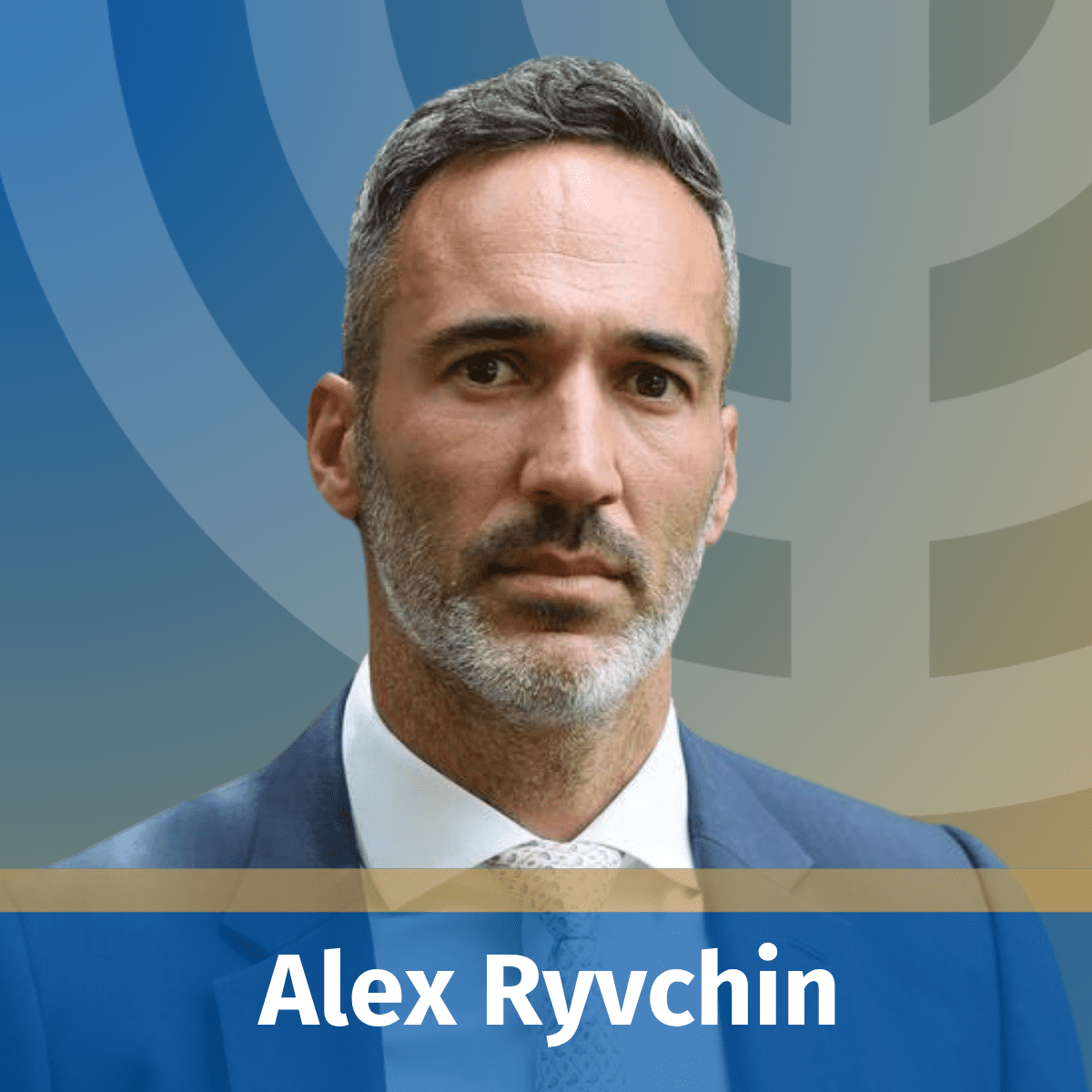
by Alex Ryvchin
21st August 2014
On July 25, as Israel’s war with Hamas raged, my niece, who is nearly 5 years of age, arrived at her Jewish day school in Perth to find the words “Zionist scum” daubed on the outer walls of the school. A Star of David was drawn between the words. The incident was hardly the most serious crime visited upon Australia’s Jewish community, which has become accustomed to verbal abuse and even acts of violence during times of turmoil in the Middle East. During the Gulf War in 1991, in which Israel was not a combatant, Jewish kindergartens in Sydney and Melbourne and three synagogues in Sydney were firebombed.
Yet the incident at my niece’s school affected me severely. It touched me personally. No-one should be attacked solely because of their national origin. Grievances from foreign conflicts should not be transplanted into Australian society. An attack on an Australian child with no understanding of or connection to conflict abroad is a study in cowardice. When a child that I deeply love was confronted with such senseless hatred, it stung.
Perhaps the incident evoked memories of a Rabbi describing to me his pain at seeing Holocaust survivors arriving at his synagogue for a Sabbath service to find neo-Nazi slogans and swastikas emblazoned on the walls of the building. The Rabbi shed tears as he described this attack on “the souls” of people who had already experienced the limits of human suffering.
Viewed dispassionately, the incident in Perth would rate at the lower end of antisemitic acts committed during the course of the latest Gaza war.
In Melbourne, on July 10, a Jewish man was confronted by two men who called him a “Jewish dog” in Arabic and then violently assaulted him.
On August 4, at a Perth Shopping Centre, a visiting Rabbi from Jerusalem and his assistant were set upon by six teenagers threatening to “fix [them] up” for “killing babies in Gaza.”
In Sydney, on August 6, eight teenagers boarded a school bus servicing three Jewish schools and threatened to “slit the throats” of 30 terrified primary school children aged between 5 and 12, while shouting “Heil Hitler,” and “all Jews must die.”
Whilst these overtly antisemitic incidents are characterised as opportunistic or random because they do not appear to be the product of careful planning or deliberation, the increasing frequency and intensity of these incidents closely correlates with the escalating use of antisemitic motifs by Israel’s critics. This phenomenon has spread from the extreme margins of politics into the mainstream media in several instances.
Take for example the cartoon drawn by Glen Le Lievre, which appeared in the July 26 edition of the Weekend Herald. The cartoon unambiguously portrayed an ugly stereotype of a Jew, identified with hook nose, kippah (religious head covering) and Magen David (Star of David), sitting in an armchair and using a remote control to blow up houses and people in Gaza.
The cartoon, for which the Herald subsequently apologised, portrayed Jews as a group as collectively guilty of acting outside the norms of civilisation and the laws of war, intentionally causing civilian deaths in Gaza. The cartoon thus attributed to Jews a collective blood guilt for the deaths and suffering in Gaza. This kind of calumny of the entire Jewish people has deep historical roots in the Deicide myth (“the Jews killed Jesus”), a myth that was only abandoned by the Christian churches in the twentieth century.
The increasing frequency of references to a shadowy, corrupting, omnipotent lobby advancing the interests of the Jewish people at the expense of the rest of humanity has become another disturbing feature of the political discourse. This too plays into long-discredited myths about a global Jewish conspiracy.
The British libertarian thinker, Brendan O’Neill observed the resurgence of conspiratorial thinking and its inevitable fixation with symbols of Jewish identification, not least Israel:
“There is a growing tendency to think conspiratorially, to be constantly on the lookout for the one malevolent thing or group or person that might be held responsible for the myriad problems afflicting Western societies and international affairs. This is the real driving force of modern-day populist anti-Zionism that sometimes crosses the line into antisemitism.”
Global audiences are continuously bombarded with images and other content on television and social media which become the basis for shallow and uninformed opinion-formation for billions of people. This plays into and fosters a reductionist mindset, a craving for simplification in the form of one big theory that will “explain everything”.
The idea that a hidden force or shadowy cabal – whether it be Freemasons, the “illuminati” or some other mysterious-sounding group – is at the centre of power, inequality and human misery has a natural appeal to the weak-minded. The characterisation of Jews collectively as “powerful and pervasive” or “hating the light”, is a symptom of this mindset.
In seeking to understand why, for example, Israel’s right to exist in peace has enjoyed cross-party political support in Australia, conspiracy theorists are blind to the obvious strategic interests and democratic values shared by Australia and Israel. They turn instead to paranoid fantasies which depict the Australian government and media as beholden to Jewish puppeteers.
A further factor in the rise of hostility towards Jews in Australia has been the use of political protest directed at Israeli government policies and actions, as a pretext to vent raw Jew-hatred.
As the British writer and satirist Howard Jacobson noted:
“It’s impossible to believe that an active antisemite wouldn’t – if only opportunistically – seek out somewhere to nestle in the manifold pleats of Israel-bashing… Tell me not a single Jew-hater finds the activity [of Israel-bashing] congenial, that criticising Israel can “never” be an expression of Jew-hating, not even when it takes the form of accusing Israeli soldiers of harvesting organs.”
Political protest against any government is legitimate, whether or not the protest is factually-based and fair or, as is often the case with anti-Israel protests, hypocritical and based on outrageous falsehoods. However, the abuse of legitimate protest as a licence to indulge in racism is contemptible and unacceptable in any context.
The picture overseas is even worse. Anti-Israel rallies have not only descended into open and unashamed outpourings of antisemitic rhetoric but have also become occasions for instigating anti-Jewish violence.
Outrageously, anti-Israel rallies in Germany have featured calls for “Jews to the gas”. In France, several such rallies have concluded with mobs attacking synagogues. A Paris synagogue filled with Jewish worshippers was assailed by protesters chanting “death to Jews” and attempting to firebomb the building.
In Australia, the use of antisemitic motifs in anti-Israel rallies has been more subtle but nonetheless pervasive.
Supporters of the Palestinians unhesitatingly condemn as racist any claim that the Palestinians are not an authentic people and have no right to national self-determination. Yet they make the same claim about the Jewish people. The very rights that the Palestinians claim for themselves they deny to others. This too is racism, not merely hypocrisy.
As the eminent Holocaust historian Yehuda Bauer observed, “Opposition to Jewish independence and to national rights for Jews does constitute antisemitism.”
The Jewish people are, and always have been, both a faith community and a national community, with a long history of statehood in the Holy Land, centred around Jerusalem. The Hebrew language, culture, religion and civilisation are native to Israel. Jews are officially recognised almost everywhere as a people, distinguished from others by a well-developed combination of shared customs, beliefs, traditions and characteristics derived from a common past. It is that combination which gives Jews an historically determined social identity, in their own eyes and in the eyes of others, which is based not simply on group cohesion and solidarity but also on their common historical antecedents.
To try to redefine the Jewish people as a non-people so as to suit the interests or convenience of others is not only dishonest but also an assault on our people’s human dignity. This is quintessential antisemitism.
An expression of this mindset is the slogan constantly heard at anti-Israel rallies that “Palestine will be free from the river to the sea” (a reference to the land between the Jordan River and the Mediterranean Sea encompassing both the West Bank and the whole of Israel). This is an unambiguous call for the destruction of Israel and its replacement with a Palestinian State.
Equally, support for a range of terrorist organisations at anti-Israel rallies, from Hamas to ISIS, leaves little doubt as to the protester’s intentions. It is self-evident that a supporter of the ISIS brand of roaming, barbaric Jihadism does not foresee a Palestinian State co-existing with the Jewish national home. Most likely, the flag-bearer does not envisage Jewish existence in any form.
Sympathy for Hamas, a designated terrorist organisation, is equally disturbing. While the murders of over 1000 Israeli civilians during a relentless campaign of suicide bombings during the Second Intifada may have been forgotten by some, Hamas remains committed to slaughtering as many Jewish civilians as possible. The Hamas Charter calls for Israel to be “obliterated” (preamble) and for the killing of Jews (Article 7, final paragraph).
Support or apologetics for Hamas’s “resistance” against Israel legitimises the rhetoric and the crimes of the organisation and seriously undermines the credibility of the Palestinian cause.
It also exposes the fact that the anti-Israel movement is less committed to advancing legitimate Palestinian national aspirations than it is to denying legitimate Jewish rights. This zero-sum thinking about the conflict, which has brought the Palestinians nothing but disaster for more than 100 years, epitomises the Palestinian solidarity movement.
The frequent use of Nazi imagery and slogans to characterise Israel and Israelis is further evidence of the extreme and often unhinged nature of pro-Palestinian activism in Australia.
As described by Mark Lindsay, writing on this site, comparing Jews or Israelis to Nazis is “an analogic argument that fails to take seriously the particularities of the current conflict and makes a mockery of the Holocaust itself.”
There is perhaps no greater insult to a people than to mock or minimise their national tragedy or to exploit it for rhetorical value. It is not intended as a statement of fact or opinion. It is intended to be hurtful. Likening Israel, the only State in the Middle East which enjoys democracy and freedom of expression, to Nazi German totalitarianism is not just a lie, but an obscenity. It falsely equates descendants of murdered Jews to the tormentors of their forebears.
Unable to substantively respond to the charge of antisemitism, the anti-Israel movement has sought to recruit individuals identifying as Jews. This appears to be based largely on the misguided and offensive belief that the endorsement of a small number of Jewish individuals absolves the anti-Israel campaign of the charge of discriminating against, or vilifying, the Jewish people collectively.
While frequently claiming to represent a “growing number of Jews”, in reality, these individuals represent virtually no-one. Sociologist Dr Philip Mendes estimates that “less than one percent” of Jews hold strong anti-Israel views. The Gen08 Survey, the most comprehensive study of Australian Jews carried out in Australia, found that while “there are a wide range of views on the policy to be followed in pursuit of peace with Palestinians… support for Israel unifies the Jewish community.”
Miniscule though they are in number, anti-Israel Jews are shamelessly amenable to being put to use as vehicles for propaganda.
Firstly, the inordinate media attention they receive gives the false impression that a sizeable number of Jews are sympathetic to their views. Secondly, they serve to “rubber-stamp” antisemitism in the anti-Israel movement by lending their names and Jewish credentials to its rhetoric and tactics. Thirdly, and perhaps most disturbingly, through grandiose public denunciations of Israel and the populist rallying cry of “not in my name”, it is implied that any Jew who refuses to join them in their denunciations of Israel bears responsibility for Israel’s actions and is therefore a legitimate target for hatred and violence.
One such activist expressed this point explicitly in a tweet the day after a recent antisemitic attack on Jewish primary school children on a Sydney school bus. He proclaimed that Jews living outside Israel “are fair game” citing their supposed “influence” and “militant support for crimes of the Jewish state.” The statement speaks volumes about his skewed moral compass and descent into a mindset of dehumanisation.
To be clear, it is false to contend that every criticism of Israel is antisemitic. Israel’s most incisive critics are its own citizens. But it is equally false to contend that no criticism of Israel is antisemitic. Criticism of Israel can cross the line into antisemitism in a variety of ways.
The Palestinian solidarity movement frequently laments its inability to obtain broad popular acceptance of its “narrative”. Until the movement abandons its extreme, annihilationist rhetoric and honestly examines the hatred it evokes and incites, the majority of Australians – and fair-minded people everywhere – will continue to be repelled by its underlying aims and methods.
Alex Ryvchin is the public affairs director at the Executive Council of Australian Jewry.