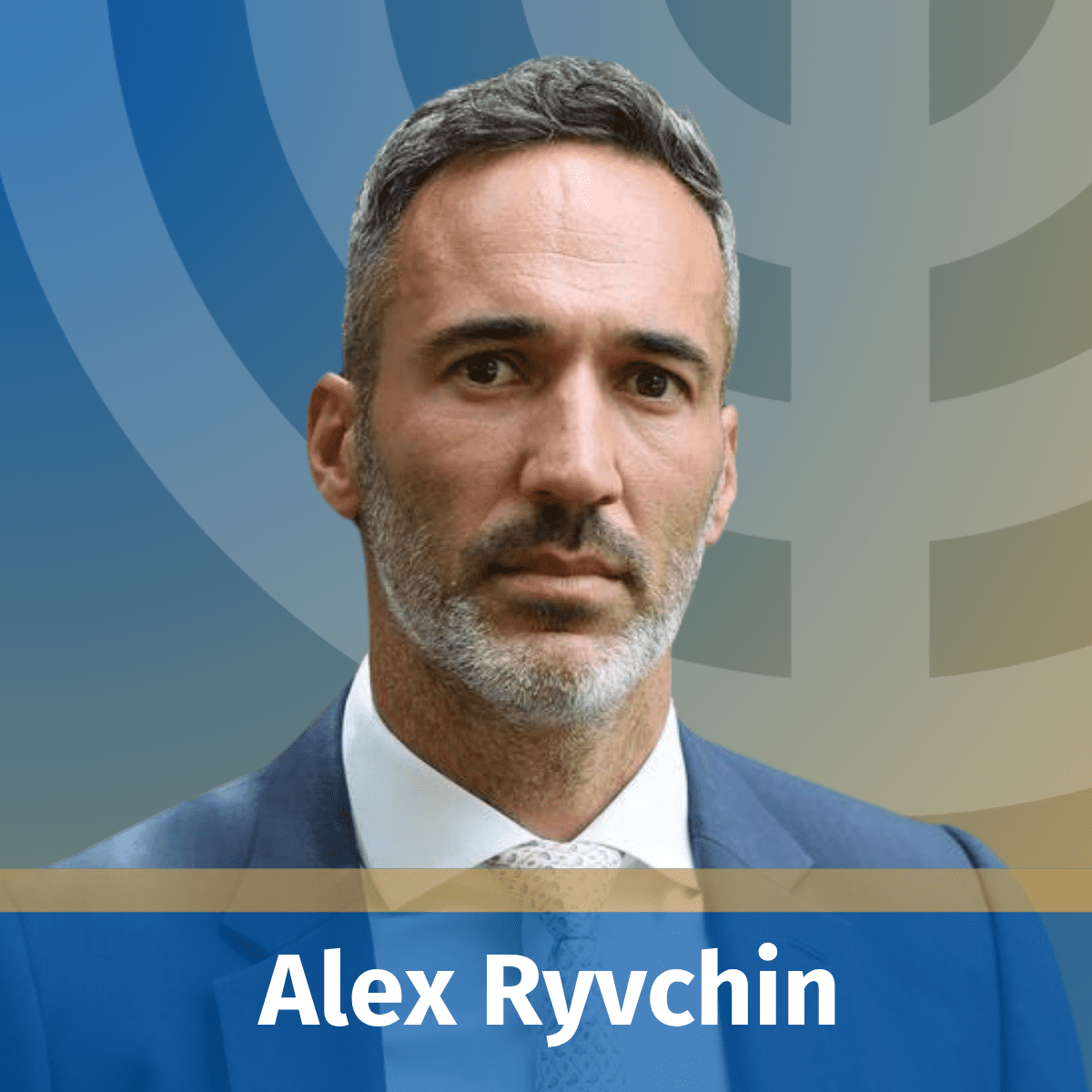


The following article has been published by ECAJ co-CEO Alex Ryvchin.
When the French playwright Edmond Fleg attended Herzl’s Third Zionist Congress in Basel he marvelled at the scene. “I looked about me. What Jewish contrasts! A pale-faced Pole with high cheekbones, a German in spectacles, a Russian looking like an angel, a bearded Persian, a clean-shaven American, an Egyptian in a fez, and over there, that black phantom, towering up in his immense caftan, with his fur cap and pale curls falling from his temples.” Fleg saw the sum of Jewish exile in that room. Jews of east and west, religious and secular, wealthy and poor, radical and conservative. A people dispersed to every corner of the globe, just melting a little into their surrounds, adopting local language, custom, dress, before being rudely plucked out and sent onward by Kings and Empresses, warlords and clerics, to new lands and new privations.
The staging of a Zionist assembly in Europe, which unified Jews under the banner of a single idea, had been achieved through a combination of grandeur and old-fashioned community organising. At the First Zionist Congress, also held in Basel, in 1897, Herzl entered the Stadtcasino in black trousers, tails and a white tie, more befitting a matinee of La Traviata than a Jewish communal event. But in the days before, Herzl sat up with students addressing envelopes long into the night.
At that First Congress, the aim of Zionism was expressed as to establish a national home for the Jewish people in the Land of Israel secured under public law. Within this simple declaration stood an almighty mission. The Jews hadn’t had a national home for two millennia. The Land of Israel had since 135 CE been known by another name, had seen multiple empires befall it, and had a meagre Jewish population of 25,000. Moreover, the mass physical return of a scattered and acculturated people to long vanquished lands was something that had never been achieved in human history.
It was this dreamy idealism that gave Zionism a magnetic quality. It animated Jewish youths to throw themselves into community activism and intellectual rumbles out of which organised Zionism grew. It led to the founding of grass-roots Zionist groups like Bilu (House of Jacob, come ye and let us go), whose members travelled from Russia to Palestine and established agricultural settlements. It compelled the likes of Chaim Weizmann to spend his student days in Germany as a member of another Zionist group, the Verein, throwing his humble stipend into sausages and beer while raucously debating Zionism, socialism, nationalism and internationalism in cafes until the wee hours.
And it prompted the writer Israel Zangwill to lambast the Jewish establishment for holding back the progress of Zionism to the detriment of the suffering Jewish masses. Zangwill thundered to the Jewish poor in London’s East End, “we are supposed to pray three times a day for the return of Jerusalem, but, as soon as we say we want to go back, we are accused of blasphemy!”
When this generation of Jewish activists encountered the pamphlets of thinkers like Leon Pinsker and Herzl their minds were instantly seared and permanently changed. How could a vigorous young Jew coming of age in a time of unsparing brutality towards Jews, be unmoved by Pinsker’s illustration of their stateless people wandering the earth as “a ghost-like apparition of a living corpse … living everywhere but nowhere in the correct place?” Or Herzl’s functional oratory that promised, “the Jews who wish for a state will have it. We shall live at last as free people on our own soil and die peacefully in our own homes.”
Not only was Zionism exciting and radical, world events conspired to make it a matter of life and death. Jews were looted, raped and slaughtered across Russia in 1881 and 1905, in Fez in 1912 and in Shiraz in 1910. This turned Zionism from a rising ideal into an urgent humanitarian mission.
The Kishinev pogrom of 1903, while comparatively less bloody than some of the others of the time, was chronicled so graphically it caused deep shame in the Jewish world. The poet Hayim Bialik wrote: “in the dark corners of Kishinev, crouching husbands, bridegrooms and brothers peering through the cracks of their shelters, watching their wives, sisters, daughters writhing beneath their bestial defilers, suffocating in their own blood, their flesh portioned out as booty.” The New York Times reported, “the scenes of horror were beyond description … the streets were piled with corpses and wounded.” After Kishinev, an editorial of The American Hebrew noted that “American Zionism had come of age,” while a Christian speaker at a Zionist meeting at Cooper Union declared, “all efforts must be made to establish a Jewish commonwealth.” Zionism offered Jews an escape from Kishinev, both physically and psychologically.
Any doubt about the necessity of Zionism dissipated as the Holocaust descended onto Europe. As David Ben-Gurion noted, “what Zionist propaganda could not do,” being to fully reveal Jewish self-delusion and vulnerability, “disaster has done overnight.” The surviving Jews, absurdly warehoused in displaced persons camps in Europe several years after the defeat of Nazism, yearned to locate the ruins of their families and rebuild lives away from European antisemitism. “Palestine is definitely and pre-eminently the first choice” for resettlement, Earl Harrison, President Truman’s envoy for refugees, reported.
The creation of Israel in May 1948 did nothing to dim Jewish interest in Zionism. The establishment of the state may have been the practical fulfilment of the Basel vision, but much work remained. There was the immediate defence of the state against invasion, rescue missions for imperilled Jews, the upbuilding of a society, and the pursuit of peace with Arab neighbours once war subsided. In a sense, Zionism became more important as the Jewish world unified behind creating a society worthy of the two millennia intermission.
For diaspora communities, there were governments to be lobbied to achieve recognition of Israel, public opinion to shape, humanitarian aid to raise. Zionist organisations like the Jewish National Fund and Women’s International Zionist Organization and a kaleidoscope of others weren’t simply folded into the Jewish State in 1948, they redoubled their efforts.
There were trees to plant to cultivate the land, university faculties to endow, lone soldiers to support, victims of terror to assist, millions of Soviet, African and Middle Eastern Jews to rescue and absorb. All of this deepened the investment of diaspora Jews in the Zionist project. No one wanted to miss out on history in the making and if Aliyah was impracticable, membership of Zionist organisations, political activism and fundraising enabled diaspora Jews to be active players in the extraordinary story of Jewish rehabilitation and national rebirth.
For Jews who had either lapsed in their religious observance or, like the vast majority of Soviet emigres, were never religious to begin with, Zionism offered the Jewish communal pride, feelings of belonging, and opportunities for learning and debate, previously only to be found in religion.
A senior Israeli diplomat once told me that Zionism was his religion. It is the sort of comment that would instantly be misconstrued as amounting to worship of settlements or prayers at the altar of Bibi. But I immediately understood what he meant. He was immersed in the story of Zionism, believed with perfect conviction in its justness and necessity, was inspired by it, and compelled to act civically and humanely by its teachings. He wished to convey the wondrous stories of Zionism to his children – Weizmann’s experiments with acetone, Herzl’s awakening at the Dreyfus Trial, the magical moment on 29 November, 1947 when Jews worldwide realised they would get their state. This diplomat wanted his children to imbibe these stories as he had, so that they too would grow up connected to their Jewishness, know who they are, remain strong in the face of aggressors, and proud in the knowledge that they belong to a people of vision and fortitude.
Yet the price of Israel’s incredible success is that the very imperatives that drew Jews to Zionism – state-building, rescue of Jewish communities, urgent defence, are now seemingly gone, meaning there is much less to connect a young Jew of Johannesburg, Sydney or Toronto to a national project playing out on the edge of the Mediterranean Sea, currently lacking towering figures and spellbinding moments.
The solution is a deeper understanding of what Zionism means and what it truly represents. Zionism, at its core, has always been about rights. Yes, Zionism sought a national home for the Jewish people. But why? To protect the most fundamental right of all, the right to live. Zionism remains, through its support for a strong Jewish state and its ethos of Jewish self-help, the greatest bulwark against antisemitism. And it was Zionism that attained recognition that the Jews are a people and thus possess the right to self-determination. As Churchill observed, “the Jewish people should know they are in Palestine as of right and not of sufferance.”
History shows that the most basic rights extended to other peoples have to be hard won and vigilantly defended when it comes to the Jews. Zionism represents that bundle of rights that the Jews have secured and will never relinquish. The right to a place of refuge from murderous hatred. The right to a national centre for the preservation and enlargement of Jewish cultural, scholarly and scientific contributions. The right for Jews, like all other nations, to freely determine their own political status.
When expressed as the embodiment of Jewish rights, Zionism soars above party politics and the acrimony of policymaking in modern Israel, and it correctly presents anti-Zionism as a campaign to strip Jews of their rights. But if Zionism loses a clear purpose, it will be swept away by more emotionally gratifying offerings, which have the capacity to deliver absolute ruin.
Alex Ryvchin is the author of Zionism — The Concise History and is the co-chief executive officer of the Executive Council of Australian Jewry.