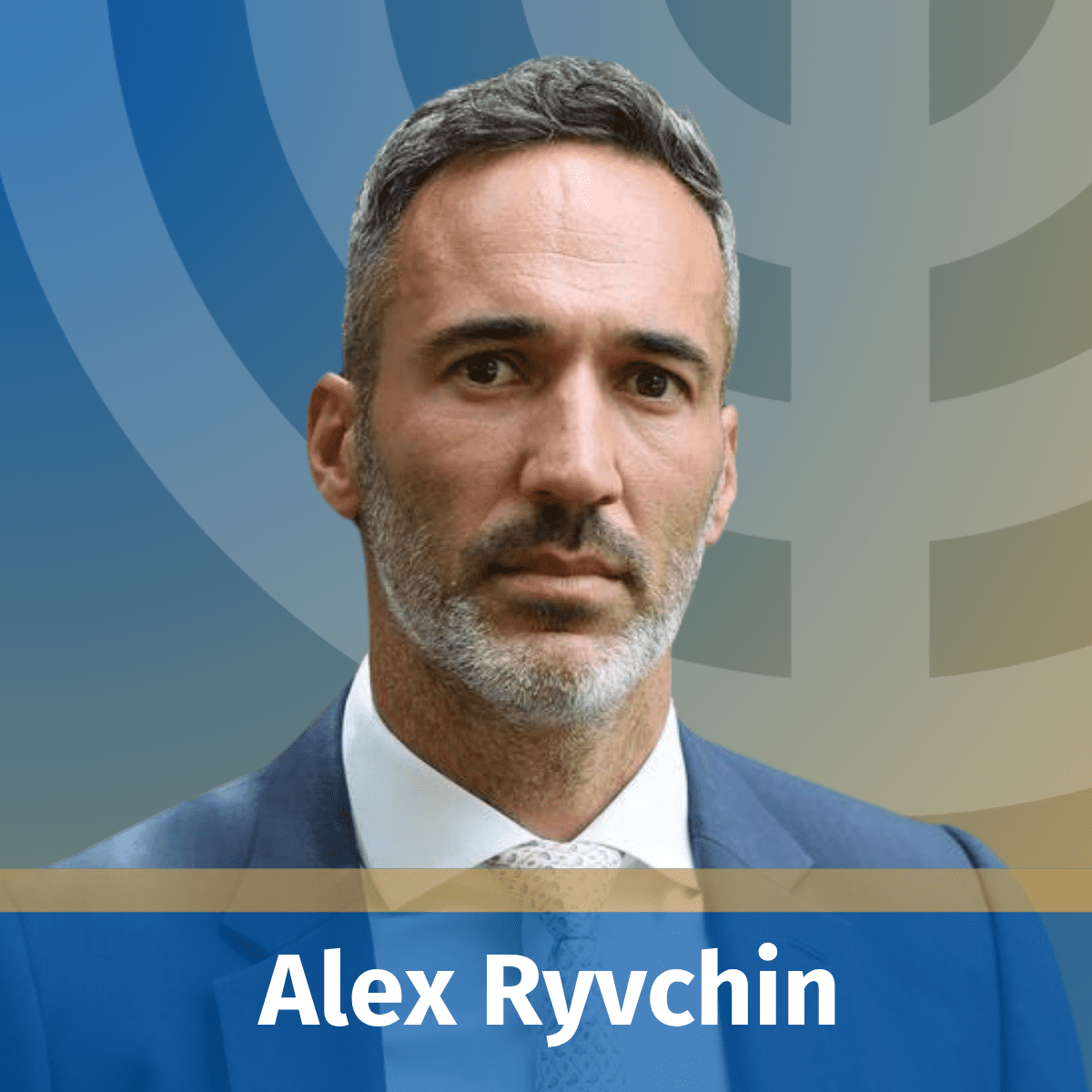


The following article from ECAJ Public Affairs Director, Alex Ryvchin, was published in Israel Hayom.
The price of historical vandalism
Israel Hayom
Alex Ryvchin
July 28, 2017
Veteran U.S. diplomat Dennis Ross observed that “the thing that plagues the Palestinian national movement more than anything else has been a historic preoccupation with symbols, not substance. Instead of building a state, the Palestinians would like to get a flag at the U.N. The day after they get a flag at the U.N., nothing changes.”
Recent Palestinian maneuvers in UNESCO, known for its listing of World Heritage Sites, have followed this very pattern of dogged pursuit of symbolic victories that fail to improve the life of a single Palestinian or build the institutions essential for statehood.
In October 2016, the executive board of UNESCO passed a resolution that disregarded the connection between Judaism and the Temple Mount and sought to deny the Jewish link to the Western Wall.
The move drew swift condemnation from UNESCO Director General Irina Bokova, who was at pains to distance herself from the resolution, asserting that “to deny, conceal or erase any of the Jewish, Christian or Muslim traditions undermines the integrity of the site and runs counter to the reasons that justified its inscription on the UNESCO World Heritage list.”
But Bokova was powerless. Privately initiated by the Palestinians, the resolution passed with the support of predominantly nondemocratic states which are among the usual automatic majority that support every resolution favored by the Palestinian Authority, whose government is now in the 12th year of its elected four-year term.
In keeping with the strategy of pro-Palestinian activism in international forums, the Palestinians viewed the Jerusalem resolution not as the limit of what they sought to achieve, but merely an incremental gain in a broader project.
Earlier this month, Palestinian demands were played out in UNESCO once more. This time the second holiest site in Judaism, the Cave of the Patriarchs in Hebron, was recharacterized as a Palestinian site.
The Jewish history of both Jerusalem and Hebron are uncontroversial and supported by overwhelming archaeological and historical evidence, quite apart from religious texts.
Jerusalem became the capital of the Israelite kingdom more than 3,000 years ago under King David.
Following its conquest by the Prophet Muhammad‘s successor, Caliph Omar, in 638 C.E., Jerusalem became Islam’s third holiest city after Mecca and Medina. The Quran had been completed some years earlier, and Jerusalem is not mentioned by name in it.
Hebron’s history is no less Jewish and no less bittersweet. In the traditions of the three monotheistic faiths, the Jewish matriarch Sarah died in Hebron and her husband Abraham purchased a plot of land there to use as his family’s burial site. Centuries later, David was anointed in the city.
In 1929, in an act borne of earlier Palestinian denial of the Jewish character of the Western Wall, an Arab mob attacked Jewish civilians in Jerusalem in what a British commission found to have “mischievous if not murderous intent.”
Much like the Palestinian push at UNESCO, the outrage began with Jerusalem and quickly spread to Hebron. There, according to an official British report, a large Arab crowd launched a “savage attack” on the Jewish Quarter, “of which no condemnation can be too severe.” By the end of the attack, more than 60 Jews had been killed, including many women and children, property had been destroyed or looted, and the remaining Jews of the city fled in fear for their lives.
In both cases, the brutal cleansing of Jews from the cities could not erase their history or break their connection with the land. In both cases, the Jews would return.
The politicization of UNESCO at the hands of the Palestinians is a transparent attempt to rewrite ancient history from the standpoint of contemporary politics, with wholly negative consequences. UNESCO itself knows this but its democratic processes cannot withstand the designs of the majority of its nondemocratic members. As Irina Bokova further noted, “When [political] divisions carry over into UNESCO, they prevent us from carrying out our mission.” Indeed, this is the story of Palestinian activism in the West, which has come to occupy a corrosive and outsized position on the agendas of trade unions, churches, social-democratic parties and campus unions.
While Dennis Ross’s assessment of the Palestinian obsession with symbolic victories rings true, he underestimates the human toll of indulging the Palestinian manipulation of international forums. UNESCO’s resolutions on Hebron and Jerusalem fed Palestinian paranoia about an imminent threat to Islamic places of worship and buttressed their claims to exclusive ownership of religious sites that predate the Islamic faith. This in turn enables the Palestinian leadership to exploit the prejudices of its people and whip them into a frenzy based on false claims of Jewish desecrations.
The slaughter of the Salomon family as they sat down to Shabbat dinner, the attack on a pizzeria in Petach Tikva, the assault on a security official at the Israeli Embassy in Amman, and the violent protest outside an Istanbul synagogue, were all attributed to the escalation in Jerusalem.
Symbolism matters. The statements of international bodies like UNESCO matter. When UNESCO is used to tactically scrub out Jewish history in the Middle East to undermine Israel’s legitimacy, this is not only an act of historical vandalism, it provides an approving nod to the Palestinians that frequently ends in bloodshed.
Alex Ryvchin is the public affairs director of the Executive Council of Australian Jewry. His new book is “The Anti-Israel Agenda: Inside the Political War on the Jewish State” (Gefen Publishing House).