


Speech by ECAJ co-CEO Alex Ryvchin to the United Nations Alliance of Civilisations, originally published in The Australian on 6 March 2026.
In the wake of the massacre, something extraordinary happened. The nation stood together in love and unity. Thousands of Australians lit candles to replicate the lights of Hanukkah the killers sought to snuff out. The word “mitzvah”, a Hebrew word meaning a kind deed, feeding the hungry, visiting the sick, offering compassion to the neglected, entered the Australian lexicon. The nation seemed to finally see the Jewish community for who we are, for the eternal values by which we live and which our laws bestowed upon the world, and that light came to symbolise a modern Hanukkah miracle, where the darkness that came to extinguish us was beaten back by forces of love and goodness.
And so, in that spirit, and in the Jewish tradition of seeking specific deeds of righteousness over trite generalities that amount to nothing, I make two very specific requests of you.
I don’t ask this place to pass resolutions or recommend policies for combating antisemitism. It would be enough to cease to contribute to the problem.
I ask that December 14, the day of our catastrophe, be recognised as World Mitzvah Day. A day where all the peoples of the world are encouraged to do a single deed of kindness. And I ask that for the first night of Hanukkah this year, a menorah be erected outside this place, for all the world to see, and for you all to be present, together with the families of the 15 that were murdered, as we light the lights that no evil could suppress.
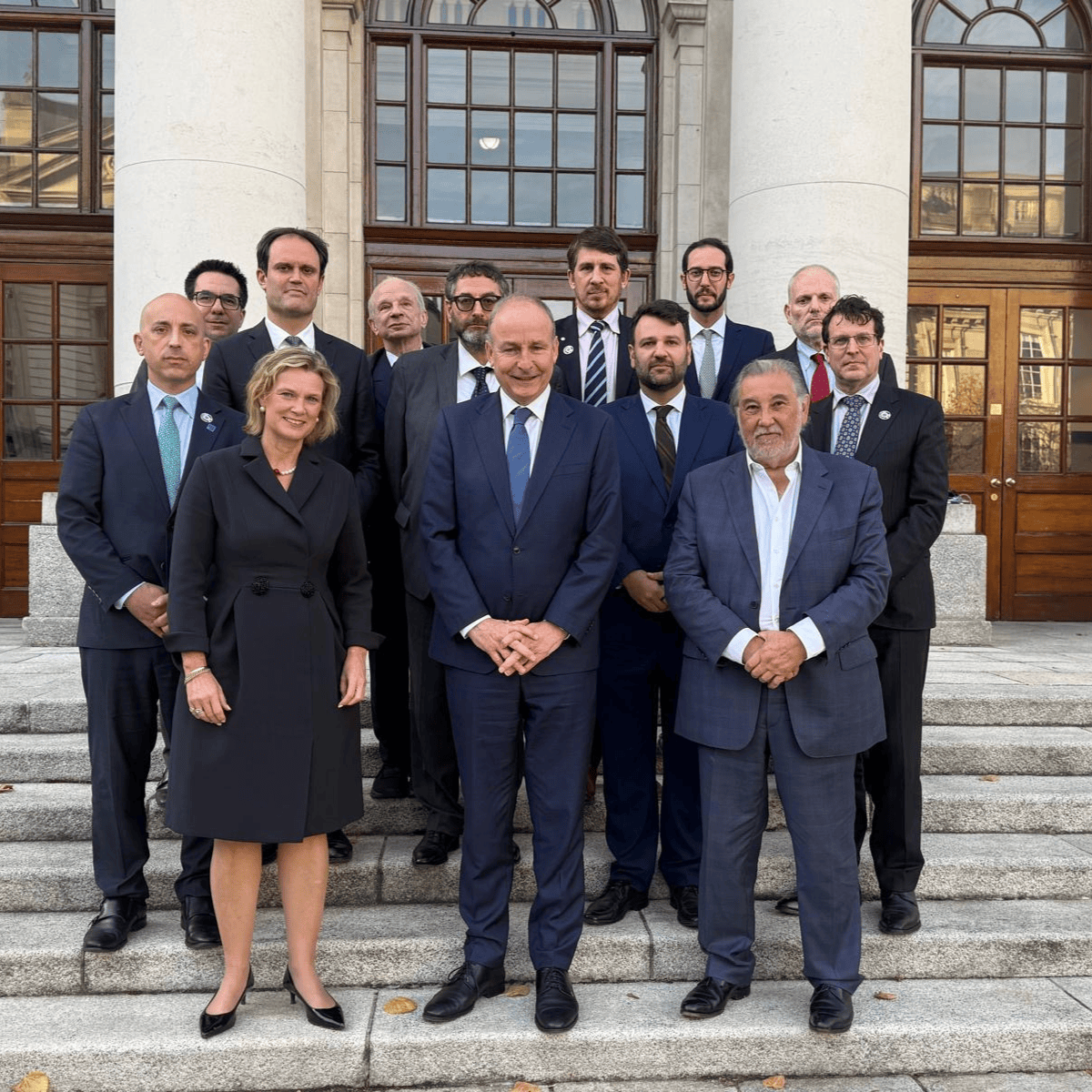
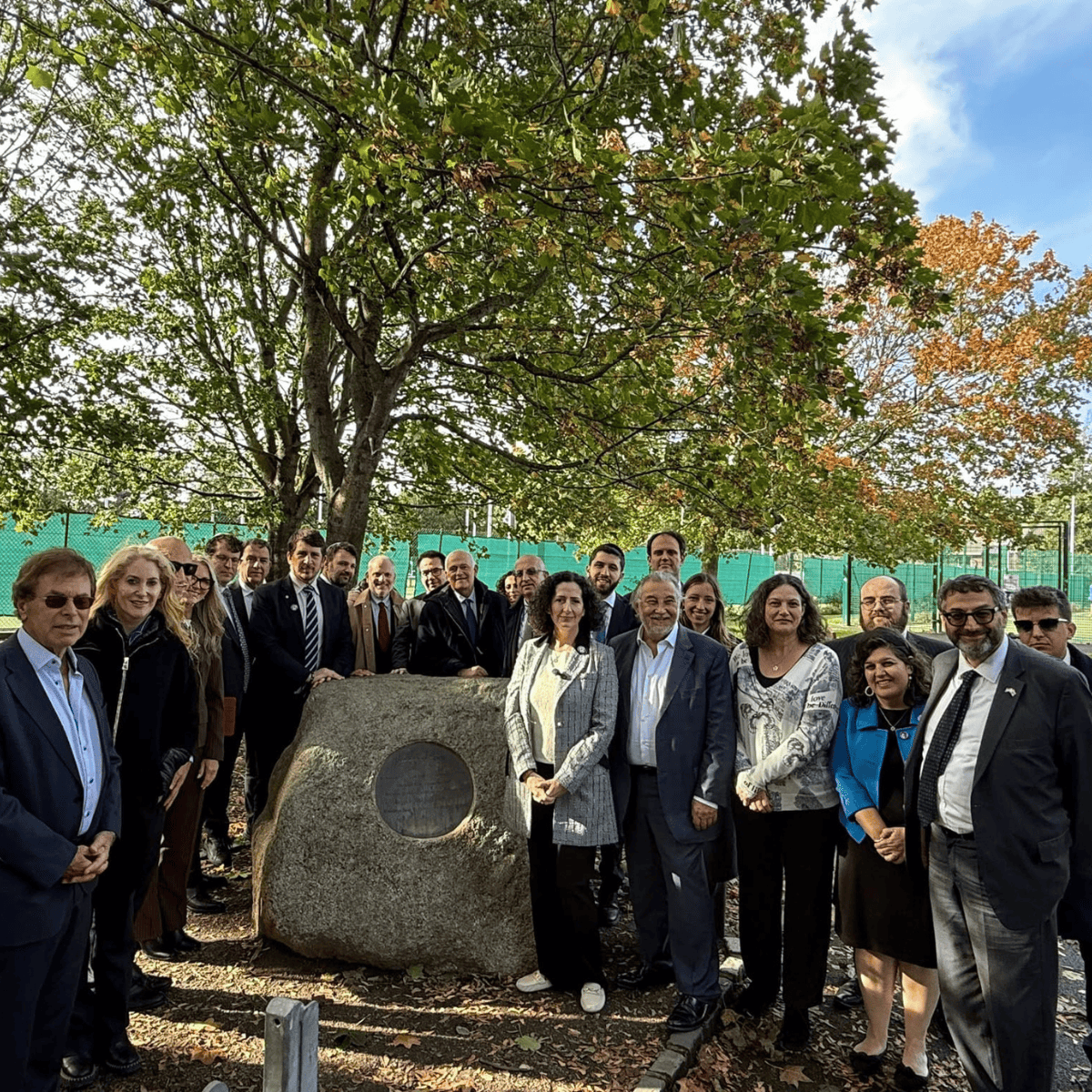

It is a great personal honour to be here. But I am not here in a personal capacity. I am here as the chief executive of the organisation that represents the Jewish community of Australia – a proud and formidable community that is as old as any non-Indigenous Australian community.
I am here with my dear friends at the World Jewish Congress, with whom I have toiled, side by side, for the safety and freedom of our people for many years now. But foremost, I am here on behalf of a community that was just ravaged by the worst terrorist attack in Australian history. An attack that took 15 beautiful souls who had come to Bondi Beach, perhaps the happiest place on Earth, to mark the first night of the Jewish Festival of Lights. They were chosen to die only because they were Jewish. That was their crime.
I have often wondered what the killers thought they were achieving. We know that terrorists inflict suffering on civilians not just out of psychopathy or sadism, but to advance a political purpose. The terrorists at Bondi were motivated by a distinct view of the world.
They draped the flag of ISIS on their vehicle before taking their positions on a pedestrian footbridge overlooking the Hanukkah party and unloading round after round into the bodies of grandparents and children, mothers and fathers, who chatted by the beach without a concern in the world as their children had their faces painted and gobbled up jam-filled doughnuts.
Did they think that by slaughtering these people with high-powered hunting rifles they would hasten the coming of the caliphate? That the Jews who helped build Australia would suddenly all flee it? That in our grief and torment we would abandon our faith or turn our backs on Israel? They clearly do not understand who the Jewish people are or how we think and act. And they do not understand how we have always responded to persecution. They have made us more devoted to being Jewish, more proud of our Zionism, more determined to live as Australians.
All these killers achieved was to take a 10-year-old girl from her parents and her sister, force a father to live through the torture of watching his daughter, his entire world, gasp for air in his helpless arms in her final moments. They forced elderly women to live out their remaining years without their husbands by their sides. Left children without fathers. And my community without its most adored and kind-hearted rabbi.
These weeks after the massacre have led to much contemplation. The Prime Minister of my great nation publicly apologised for failing to keep my community safe. The country is holding a royal commission into the attack and the broader issue of antisemitism, which will contemplate how such a great country got to so low a point and how a father and a son were radicalised to the extent of viewing Jewish people living and working in the same city as vermin fit only for destruction.
And I ask you to contemplate too. You are individuals afforded great respect and privilege. You work each day in the UN, a global institution that holds unrivalled influence and moral power. The things you say and do reverberate through universities, the world’s media and human rights organisations. You set the world’s agenda.
I know that those who come here seek to do good and serve the public. You are compelled by righteous motives to help the weak and voiceless, to feed the hungry, the very same motives that drove the people murdered at Bondi.
But I ask you also to contemplate: Have you done all you can to drive this evil from the world?
What would the victims say if they were sitting here with us? We need not contemplate. I know the answer. I know because I knew them. And with several of the dead – Tibor Weitzen, Alex Kleytman, Reuven Morrison and my rabbi, Eli Schlanger – we discussed international affairs, Israel, the UN on a regular basis.
I know what they thought of the secretary-general telling the world that the abduction, rape, torture and unsparing slaughter of Jews on October 7 “didn’t happen in a vacuum”. I know what they thought of the apparent inability of many in this place to talk about antisemitism without bolting it on to Islamophobia, a habit that makes it impossible to counter either one and actually entrenches the perception of conflict between Jews and Muslims, or the suggestion that antisemitism is not the fault of the antisemite, but is driven by the conduct of the Jewish state, a vapid modernisation of the old standard that Jews bring hatred upon themselves.
In truth, they held this institution in contempt, not only for the harm it does but, even more so, for the good it could do, but does not.
I know also what Israel meant to them. What it means to Jewish people throughout the world. To many here, it is a nuisance, an upstart. A tiny country that is a little too assertive, too self-confident, too pushy. To us, it is not a distant country. It is an idea. The idea of the restoration of Jewish self-determination to the lands in which we first dwelled and which we first defended thousands of years ago.
It means Jewish freedom, Jewish self-reliance and the innate love and connection Jewish people, like any scattered minority, feel for one another regardless of the languages we speak or the countries in which we live.
So when it is wronged, when it is attacked, when member states here behave like petulant children and claim that the country is not really there, it is an attack on every Jew, and that is why we don’t stand for it. And when the organs of the United Nations indulge this kind of prejudice, it sends a message to those who wish us harm; that they are on a righteous path, that they are supported while we are alone. To embolden the hateful is to be a participant in their ultimate deeds.
I ask you to also contemplate what we can do to ensure the cruel deaths of those 15 innocent people, were not in vain. We need not speculate because they lived their lives with such clarity of values that there can be no confusing how they would act or what they would say in a given moment. And their surviving families have spoken also. They seek no vengeance. They want only to replenish the good that was taken from the world on that catastrophic day.