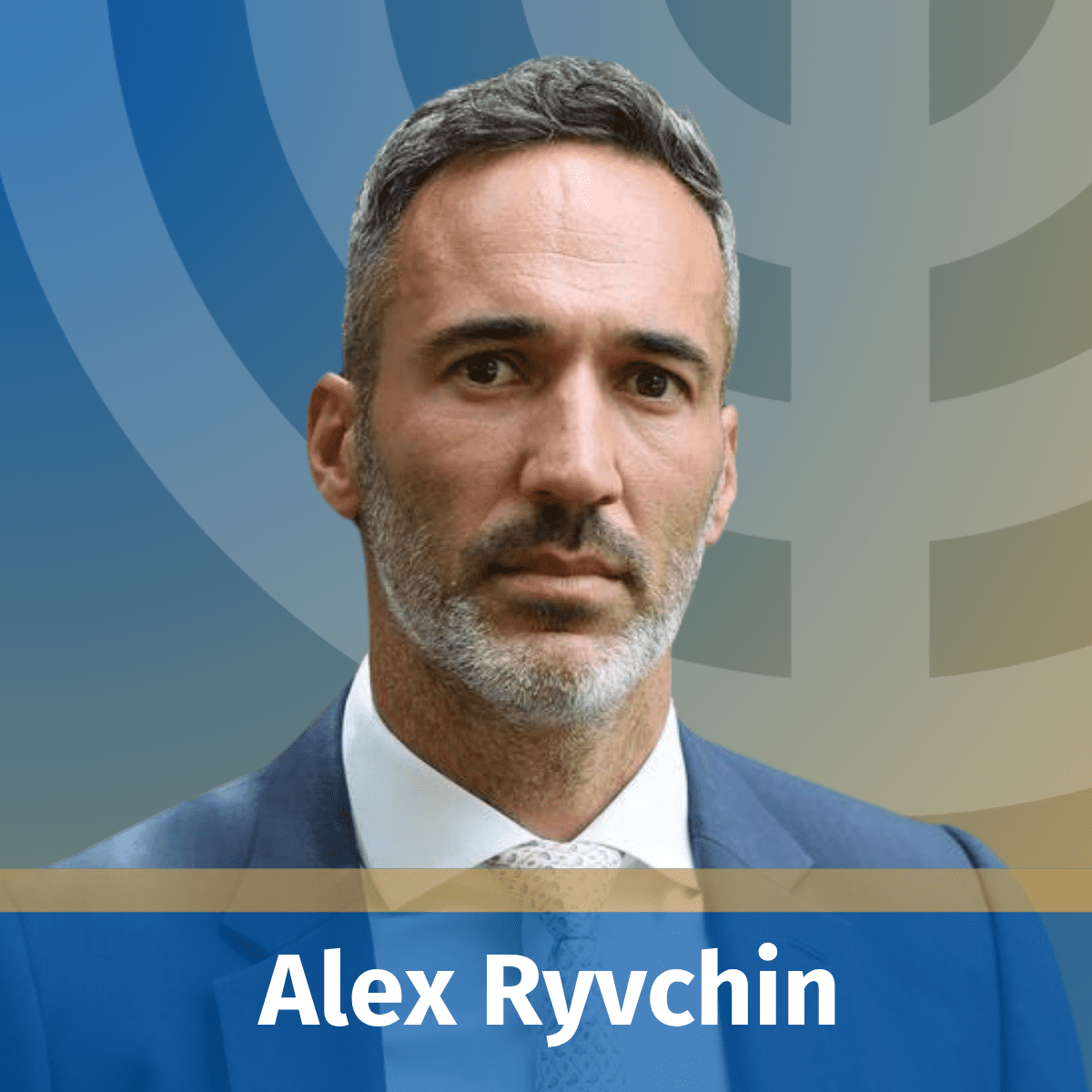

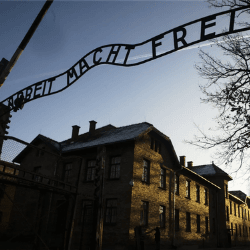
The following article has been published in The Sydney Morning Herald by Alex Ryvchin.
On the eve of Monday’s 75th anniversary of the liberation of the Auschwitz death camp, a new study has found that a quarter of French millennials haven’t heard of the Holocaust, while an earlier study of American millennials found that 66 per cent did not know what Auschwitz was.
The findings come at a time of surging anti-semitism in both countries, with incidents targeting French Jews rising by 74 per cent, while the US has seen a series of lethal attacks against Jewish gatherings and places of worship, the latest involving a machete attack at the home of a Rabbi in upstate New York. In Australia, serious cases of anti-semitic verbal abuse, intimidation and harassment rose by 30 per cent, from 88 to 114, in the past year.
The fact so many young people have no knowledge of a genocide conducted in the heart of enlightened Europe, in part through the operation of the most lethal and efficient killing facility in human history, is disturbing in itself. The consequences of this absence of knowledge will surely be felt for years to come. It is a challenging story to teach, harder still to fully imbibe, but one that is critical to understanding man’s destructive capacity, the endpoint of the relentless debasing of a people, and the misery that racism can unleash on the world.
More than 1.3 million people were murdered at Auschwitz, 90 per cent of them Jews. By the time the genocide of the Jews across Europe had ended, more than 3 million Jews had been wiped from existence in the death camps. The total Jewish dead stood in the vicinity of 6 million. They died in all corners of Europe, from disease in ghettos, from poison gas, mass shootings, live burial, beatings, incineration.
Seventy eight per cent of the Jews who had lived in territories that fell to the Nazis, perished. In comparison, between 1.4 per cent to 3 per cent of the non-Jewish population in the same territory was killed. Dynasties and entire families, great sages and common workers, Nobel laureates and humble students, whole villages and communities, all disappeared. Thriving Jewish intellectual and cultural centres like Krakow and Vilnius that had bustled with Jewish life, now reduced to rude husks, urban memorials of human depravity.
How many more Freuds and Einsteins, Chagalls and Primo Levis were among them we can never know. A million Jewish children were killed. A million Anne Franks vanished in a pit of suffering. But the numbers obscure the millions of individual stories of cruelty, misery, and unbearable loss. While the precise manner of the killings was so bestial that it forces one to reconsider the very nature of humanity.
The Jews were taken to the camps in train wagons used for transporting cattle in which they would ride across the continent for days on end, completely without food or water, sometimes given a pause so that the corpses of loved ones could be tossed out of the wagons before continuing onward to the camps.
In some camps, the fit were put to slave labor until their bodies gave out while the very young, the old and the sick were selected for gassing immediately. The process of selection would take place on the platform immediately upon arrival. Nazi doctors looked over the human cargo, sending them to one queue or another, forever tearing sister from sister, mother from child.
The ones selected to die immediately were led into chambers which were sealed behind them before canisters of poison were released through chutes in the ceiling. When the victims ceased their writhing and their nervous systems succumbed, other inmates were charged with transferring the dead to the crematoria, clearing the chamber of visible signs of distress like bodily waste and fingernails clawed into walls, to ensure the next batch of victims would enter the chamber without disorder or resistance. At the peak of the killing, the Jews were killed at a rate of up to 15,000 people a day.
At Auschwitz, human experiments were conducted on the living, including determining the time to death from injection with various poisons, the effect of removal of organs without anaesthetic; and freezing victims to see how close they could be brought to the point of death and still be revived. If they survived the torture that masqueraded as science, their only salvation was the gas chamber.
Those who were able to survive for any length of time in the camps existed in a realm somewhere between life and death, but surely closer to death. They ate virtually nothing, slept in barns and worked outdoors in the freezing Polish winter wrapped in rags, and were rife with diseases like dysentery and typhoid from malnutrition and the absence of clean water. Such was the deathly pall about them that rats sometimes attacked the still-living, mistaking them for corpses.
In the perfect crescendo to centuries of gradually reducing the humanity of the Jewish people, they were exterminated in purpose-built camps, industrial factories of destruction, using a common pesticide, Zyklon‑B.
The seemingly infinite stories of infinite evil and suffering that together form the Holocaust have been presented to us over and over again in dispassionate historical texts, in Hollywood films, novellas and memoirs. All seek and all fail to fully explain why human beings would act this way to their fellow man. What discord exists in the hearts of ordinary men and women that they would shed their humanity entirely, and seize with unrelenting fury and purpose the opportunity to dispossess, humiliate and destroy their neighbours simply because they were Jewish? This is the imponderable at the heart of the Holocaust. And yet as incomplete as our powers to fully comprehend this story may be, through the study of it, we develop an empathy, a greater humanity and an awareness of our own capacity to destroy.
Perhaps then, stories of Australian schoolchildren taunting their Jewish peers as “vermin” or of the insignia of Nazi killing squads being proudly displayed at nationalist rallies, or the flag of the Nazi regime being hoisted in a Victorian town for all to see, can be consigned to the dustbin of history.
Contact
Alex Ryvchin | Co-CEO
ph: 02 8353 8505 | m: 0478 297 245
e: [email protected] | www.ecaj.org.au