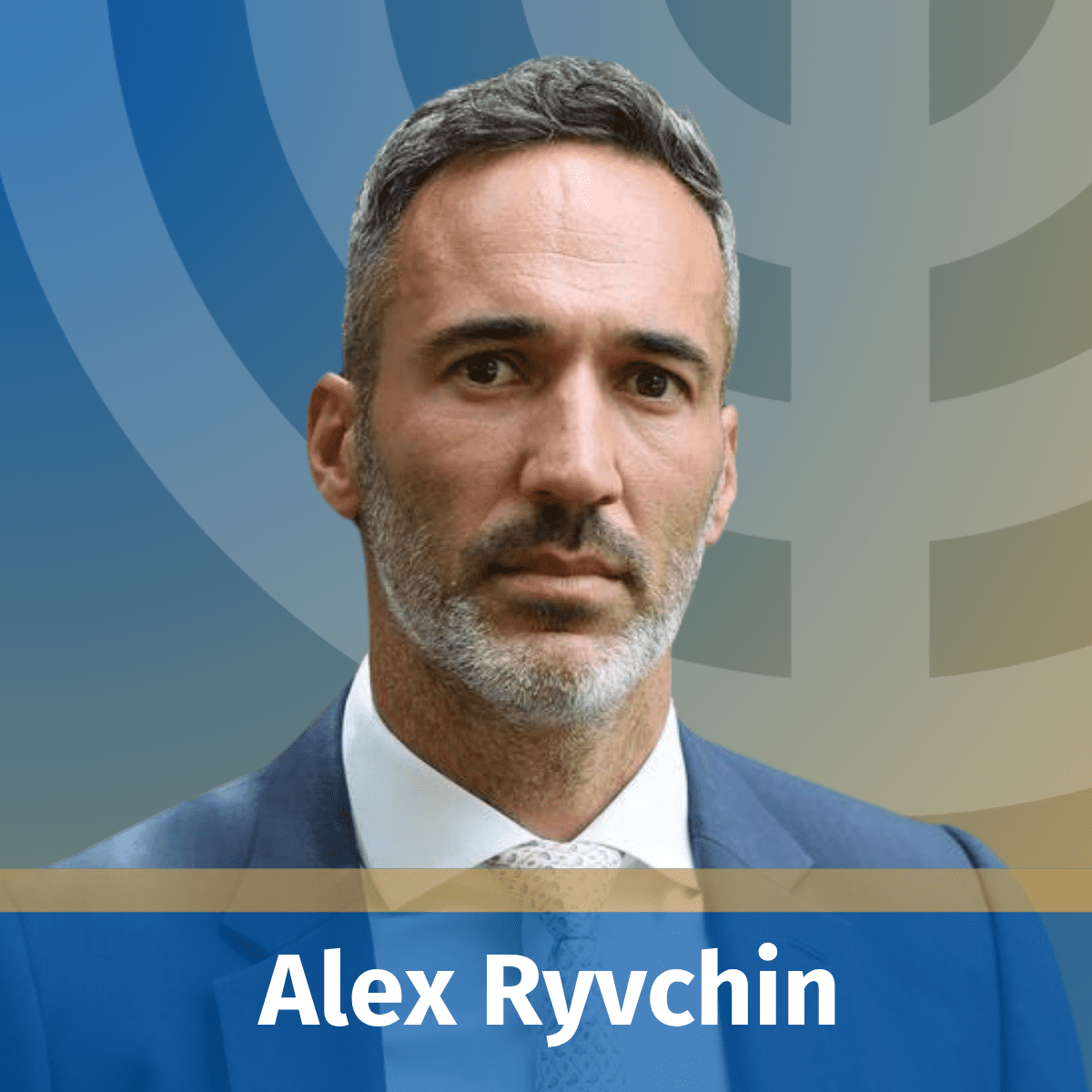


The following article has been published in Newsweek by ECAJ co-CEO Alex Ryvchin.
A new report by Amnesty International accuses Israel of “apartheid” in what is the latest strike in a coordinated NGO campaign to associate the State of Israel with crimes against humanity. The report follows a release by another human rights giant, Human Rights Watch, in April 2021 based on near identical methodology: redefining “apartheid” to little resemble the crimes in South Africa; re-characterizing the Israeli-Palestinian conflict to fit an oppressor versus oppressed narrative; and disfiguring Jewish-Israelis into a stereotype of greed and cruelty.
The origins of this campaign lie in the NGO forum of the UN World Conference against Racism held in Durban, South African in September 2001. The Conference is notorious for the racism that marred an event convened for the very purpose of combatting such conduct. Posters displayed Jewish caricatures, placards celebrated Hitler and participants circulated copies of the antisemitic fabrication The Secret Protocols of the Elders of Zion. U.S. Congressman Tom Lantos called it “the most sickening display of hate for Jews since the Nazi period.” The UN’s human rights commissioner, Mary Robinson, told the BBC “there was a horrible antisemitism present.”
Against this backdrop, the conference of over 1,500 representatives of international non-governmental organizations, adopted a resolution that defined Israel as a “racist, apartheid state” and called for the launch of a “global solidarity campaign” targeting governments, UN agencies and civil society to achieve the “complete and total isolation of Israel.” Amnesty was a key player in the Durban Conference and in the adoption of the resolution and has been at the forefront of the campaign ever since.
Apartheid is a system of legal segregation under which one ethnic group subjugates another, treating citizens of the same state differently based on their ethnicity. Exclusion from schools, professions and public office, segregated toilets, restaurants and voting prohibition are the manifestations of this crime. Speak to any South African expatriate and they will regale you with the full indignity and inhumanity of the system that once gripped that country.
Now stand on a street corner in Israel and make up your own mind. Stand for example on the university campus in the northern city of Haifa, where my family lives, and you will see Arab-Israeli students in hijabs socializing and studying alongside Jewish-Israeli peers. 41 percent of Haifa University’s students are Arab-Israelis. Does that sound like apartheid to you?
Of course, it doesn’t — nor does it sound like apartheid to Israel’s Arab citizens. In a Harvard University poll, 77 percent of Israeli Arab citizens said they prefer to live in Israel than in any other country. Israel has over 400 mosques throughout the country.
Ask Amnesty International how many synagogues remain in the Arab world.
Amnesty of course knows all this. Why then does it invest enormous resources into publishing dangerous lies? The answer is in the worldview that guides the decision-making, the appointment of key researchers and the choice of targets for groups like Amnesty and Human Rights Watch.
This was most effectively explained by Robert Bernstein, who became a legend in the human rights community, first by protesting against the Soviet Union for its censorship of authors then as CEO of Random House, where he gave Toni Morrison her big break and published dissident authors like Andrei Sakharov and Wei Jingsheng. Back in the 70s, Bernstein started the Fund for Free Expression and Helsinki Watch, which monitored the Soviet regime’s compliance with its human rights pledges. The groups eventually became Human Rights Watch, which Bernstein led as founding chairman.
But by 2009, Bernstein began to see the slide of the organization and others like it away from giving a voice to those muted by iron curtains and secret police, and toward an increased focus on democracies that were easier to access — and popular targets among anti-western ideologues. Writing in the New York Times, Bernstein presented an extraordinary critique of the organization he had founded and led. “We sought to draw a sharp line between the democratic and nondemocratic worlds, in an effort to create clarity in human rights,” Bernstein wrote. “Now the organization, with increasing frequency, casts aside its important distinction between open and closed societies.”
Leaked emails from Human Rights Watch staff revealed just how systemic this mindset had become. The group’s CEO, Ken Roth, solicited a donation of nearly $500,000 from a Saudi billionaire on the condition that Human Rights Watch does not investigate violations of LGBT rights in the Middle East with those funds. The donor Roth had courted had also been found in breach of labour rights, effectively enslaving his migrant workers.
Moreover, the group’s once senior Middle East official, Sarah Leah Whitson, also travelled to Saudi Arabia to extract sizable donations on the basis that Human Rights Watch was fighting “battles” with “pro-Israel pressure groups.” As Jeffrey Goldberg wrote in the Atlantic, not only did this appeal to embedded local prejudices of an all-powerful Jewish lobby, but there was something rather “queasy-making about a human rights organization venturing into one of the world’s most anti-democratic societies to criticize one of the Middle East’s most democratic states.”
Amnesty International has suffered the same fall. In April 2018, Amnesty’s Secretary-General called Israel’s democratically-elected government “rogue.” In 2010, the head of its Finland branch called Israel a “scum state.” Amnesty’s UK Campaign Manager has likened Israel to ISIS and been condemned for his attacks on Jewish Members of Parliament.
In 2015, Amnesty UK voted down a motion to campaign against antisemitism amid deadly acts against Jews in Europe. The organization claimed it did not support campaigns with “a single focus,” dubious indeed given its anti-Islamophobia campaigns and obsessive pursuit of Israel.
The former head of Amnesty’s gender unit, Gita Sahgal, was suspended from the organization and eventually forced out after she criticized Amnesty’s partnership with the controversial British group, CAGE, which campaigns for the release of those detained in the war on terror. Moazzam Begg, CAGE’s director of outreach has said that British, American and Australian troops were “the bad guys” and that the Taliban “should be given the right to celebrate” its conquest of Afghanistan.
Then there’s the researchers Amnesty hires to write its reports. Amnesty hired Deborah Hyams as its “Israel, Occupied Palestinian Territories” researcher despite Hyams’ earlier record of participating in protests alongside local activists and acting as a “human shield” against Israeli soldiers. Another senior Amnesty hire, Saleh Hijazi, previously worked for the Palestinian Authority and was the listed contact for a local NGO whose slogan is “We are Intifada!” Amnesty’s research consultant, Hind Khoudary publicly declared she wanted Israel “gone.”
Any of these associations should have disqualified these individuals from ever touching anything concerning Israel. Instead, Amnesty prizes and defends them as assets.
The former U.S. diplomat Daniel Moynihan once observed that the most democratic states suffer the worst accusations of human rights abuses because their transparency makes them so easy to see, report and exploit. They pay for their openness. To defer to Robert Bernstein’s wisdom once more, only by returning to their “founding mission and the spirit of humility” can these organizations again serve as a moral force.
Until then, they have no moral authority to comment.
Alex Ryvchin is the Co-CEO of the Executive Council of Australian Jewry and the author The Anti-Israel Agenda – Inside the Political War on the Jewish State.